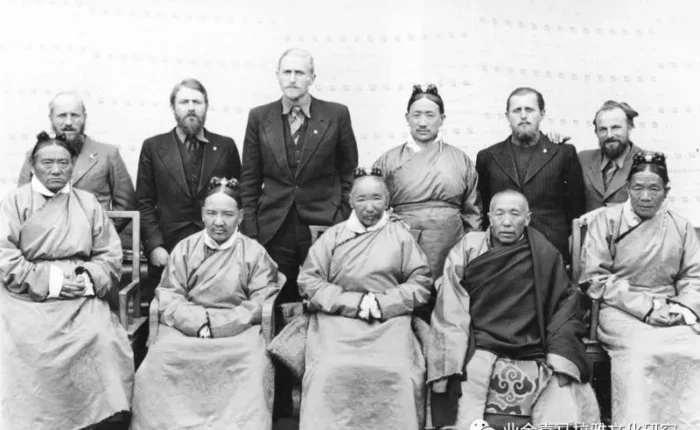
Dive into the captivating story of the British Trade Agency in Gyantse, Tibet. Discover its origins, cultural impact, and pivotal role in the historical trade relations between Britain and Tibet, highlighting its significance in the broader context of geopolitical dynamics and cultural exchanges.Read More
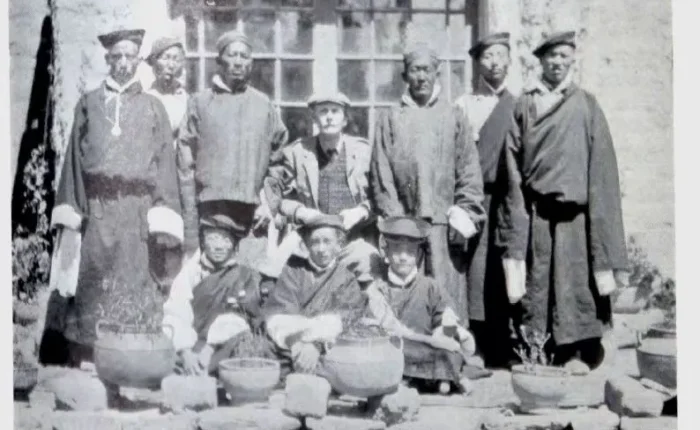
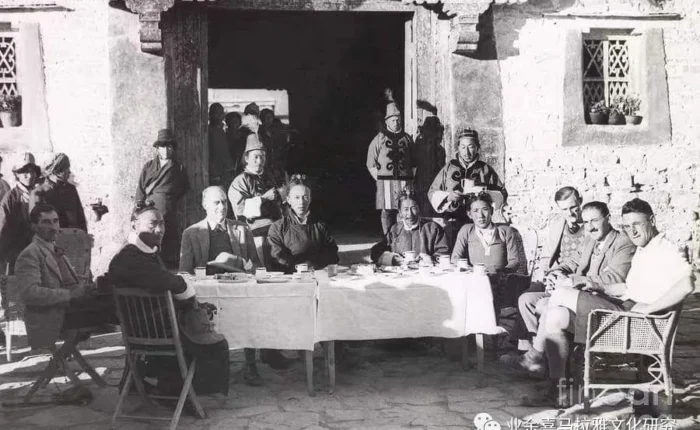
The British mission in Lhasa represents a fascinating period in the complex tapestry of Tibet's foreign relations. Its establishment, evolution, and the personalities involved highlight the geopolitical significance of Tibet during a time of great change. The mission served not only as a diplomatic outpost but also as a cultural and informational bridge, leaving a...Read More
Chensal Kunphel, a pivotal figure in Tibetan history, against the backdrop of the 20th century's seismic shifts in Tibetan politics and society.Read More
Explore the life of Tsarong Dazang Dradul, a key figure in Tibet's history known for military reforms and industrial innovation. From leading the modernization of Tibetan armed forces with British aid to establishing the first mint and textile factories, Dradul's legacy is marked by his efforts to transform Tibet into a modern state. Despite his...Read More
Testament to the enduring legacy of King Gungri Gongtsen in shaping the nation's destiny. Fascinating chapter in the rich tapestry of Tibetan history,Read More
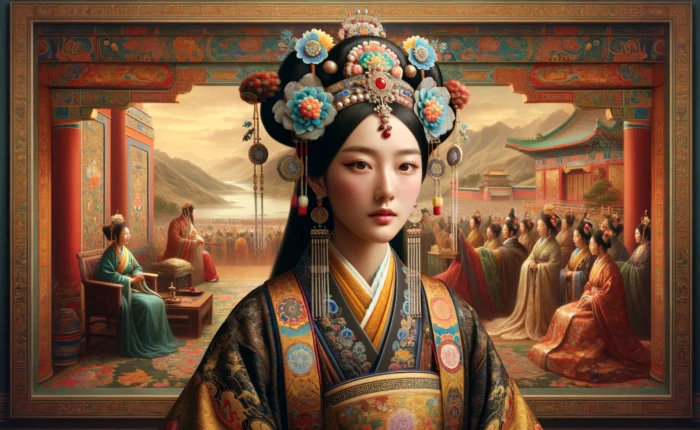
Explore the rich history of the Tang Dynasty's relationship with the Tibetan Empire, from early diplomatic efforts to the landmark marriage of Princess Wencheng. Discover how these two great powers fostered a period of mutual respect, cultural exchange, and the flourishing of Buddhism in Tibet, marked by significant diplomatic missions and enduring peace. This detailed...Read More
Explore the profound impact of the first seven Tsenpos on Tibet's early history, from Nyatri Tsenpo's founding of the Yarlung Dynasty to the cultural and political transformations under their reign. Discover how Buddhism's introduction and the interplay with Bon religion influenced Tibet's ancient legacy, shaping its cultural, political, and religious landscapes.Read More
Explore the zenith and decline of the Tibetan Empire, from Trisong Detsen's expansion and the fusion of Buddhism with the Bon religion to the era of fragmentation. Discover the key events, including the Tang-Tibetan alliance and Langdarma's reign, that shaped Tibet's ancient history and cultural heritage.Read More
The Pakmodru government stands as a pivotal chapter in Central Tibetan history, marking the transition from Mongol-backed administrations to a unified, indigenous Tibetan state. Established firmly between 1349 and 1354, the dynasty emerged when the visionary leader Tai Situ Jangchup Gyeltsen successfully challenged the Sakya school’s right to administer Central Tibet under Mongol rule. #image_title...Read More
Explore the life of Drogon Choegyal Phakpa, also known as Lobsang Gyamtso and Phakpa Rinpoche. Born in 1235, he was the fifth patriarch of the Sakya sect and founder of the Sakya Dynasty in Tibet. Discover his profound impact as Kublai Khan's spiritual advisor, his leadership in the Bureau of Buddhist and Tibetan Affairs, and...Read More
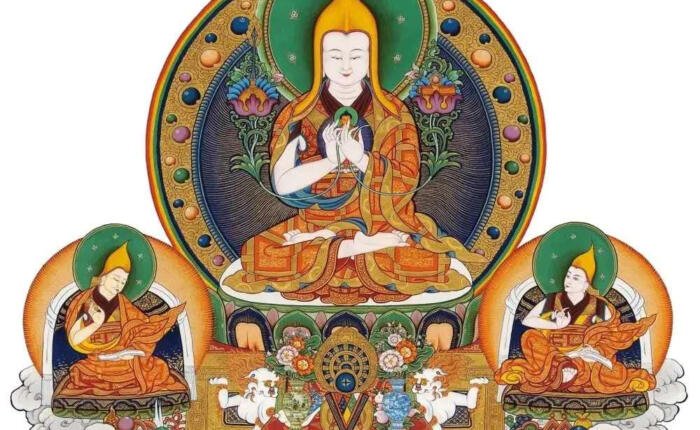
Embark on the spiritual journey of Master Tsongkhapa, witnessing his luminous transfiguration and encounters with principal deities. Delve into the profound moments of his life, his transformative appearances, and the serene final days at Ganden Monastery. Discover the enduring impact and enlightened legacy of Tsongkhapa, a revered figure in Tibetan Buddhism, whose teachings and spiritual...Read More
Explore the remarkable journey of Lama Marpa Lotsawa, a key figure in Tibetan Buddhism, who made three perilous journeys to India in pursuit of Buddhist scriptures. Learn about his unyielding determination, early life, encounters with renowned masters like Naropa, and the lasting legacy he left in the Kagyu lineage of Tibetan Buddhism.Read More
Uncover the enigmatic story of the Tibetan Empire's rise and fall during the Tang Dynasty. Learn how this mighty power, originating from the Tibetan Plateau, became a dominant force in East Asia, extending its influence over Western China and into Central Asia and India. Discover the key factors behind its ascendancy: a favorable climate during...Read More
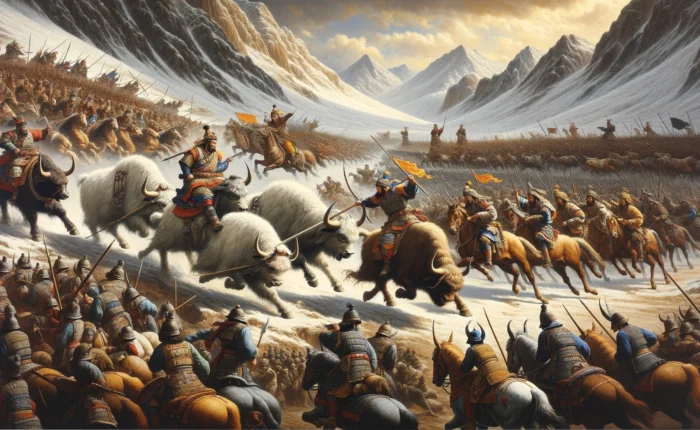
Explore the rise of the Mongol Empire, a unique force in 13th-century Asia under Genghis Khan's leadership. Discover how this first universal empire united disparate tribes and treated various religions equally, echoing its military prowess across continents. Delve into the multifaceted history of the Mongols, their cultural assimilation, and the impact of their conquests on...Read More
Explore the remarkable life of Princess Jincheng, Li Nunu by birth, a pivotal figure in the Tang Dynasty known for her influential marriage to Tibetan King Tride Tsukten. Fostered by Emperor Zhongzong, her union in 710 AD was more than a matrimonial alliance; it was a cornerstone of diplomatic relations between the Tang Dynasty and...Read More
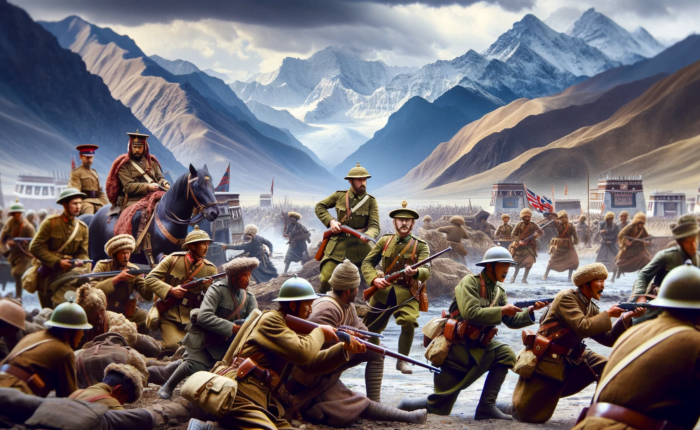
Dive deep into the annals of history with our comprehensive coverage of the 1904 Anglo-Tibet War, a pivotal moment in the British expedition to Tibet. Discover the strategic, cultural, and political intricacies that defined this significant conflict. Explore the events, key figures, and lasting impacts of this historic encounter between the British Empire and Tibet,...Read More
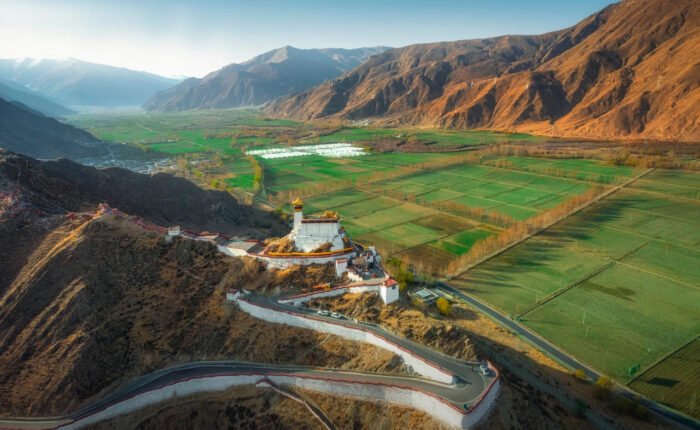
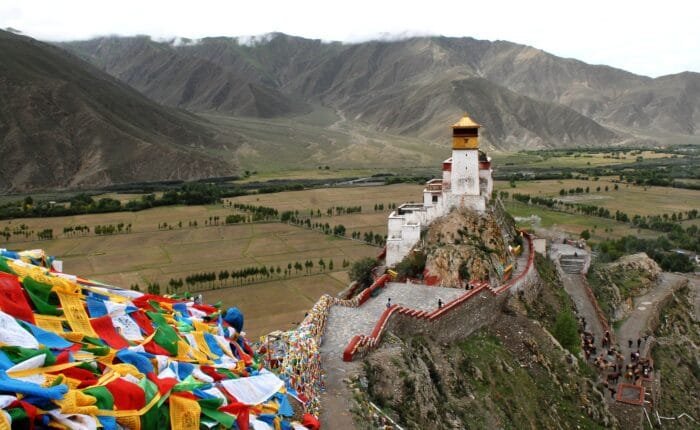
Discover the historical Yumbulagang Palace, the first imperial palace in Tibet. Explore its rich history and admire its stunning architecture.Read More
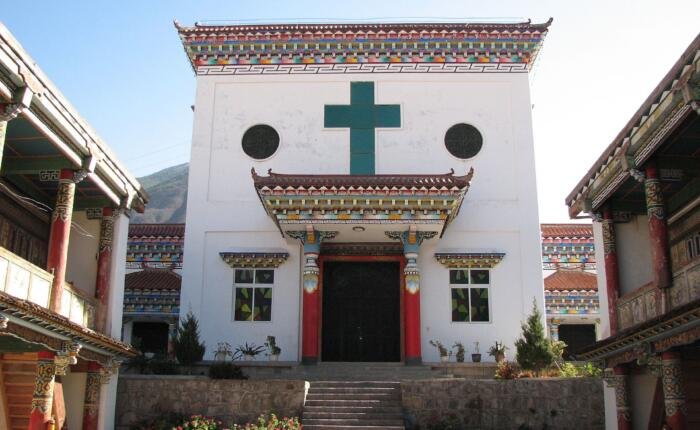
n 1745 AD, the strong rejection and opposition from Lhasa's monks and laypeople compelled Chief Kalon Phola Nai to take a decisive step. He banned the Catholic Church's missionary activities in Lhasa, thereby bringing an end to the efforts of the Kapuqing Tibetan Missionary Society.Read More
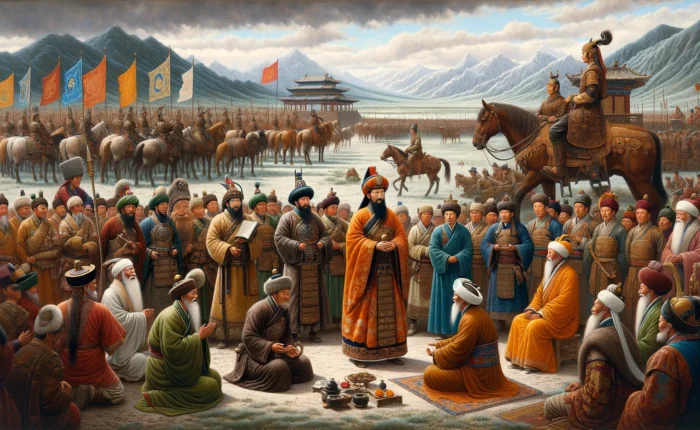
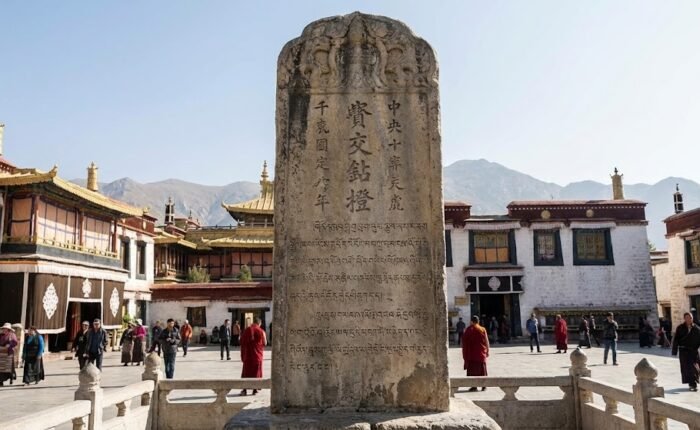
Explore the historic Changqing Treaty of 821–822 CE, the largest alliance between Tang China and the Tibetan Empire. Learn about the peace summit in Chang'an and Lhasa, the significance of the 18 officials who signed, and the enduring legacy of the Lhasa Treaty Pillar at the Jokhang Temple.Read More
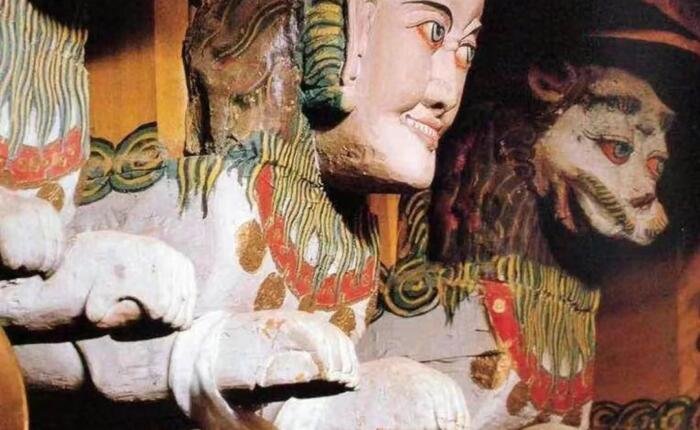
Discover the mystical allure of Jokhang Temple's Sphinx Lion-Human Sculpture, a captivating wood carving from the Tubo period. This unique masterpiece embodies the rich heritage of Tibetan artistry, merging mythical elements with intricate craftsmanship. Explore its enigmatic history and symbolic significance in the heart of Tibetan cultureRead More