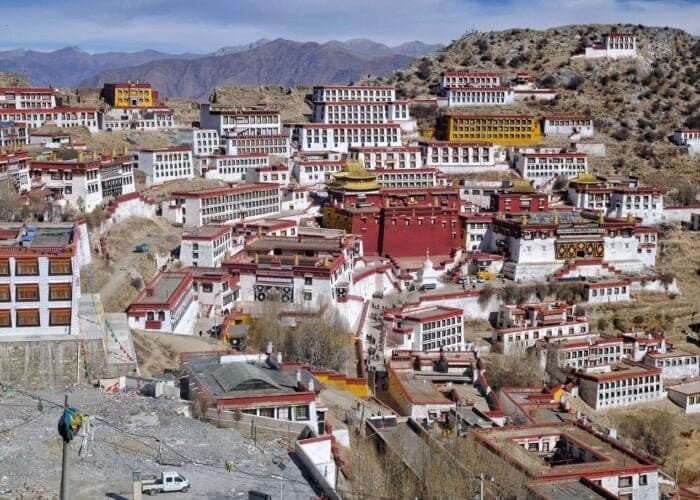
Perched high on Mount Drok Riwo at an altitude of 4,200 meters, Ganden Monastery is one of Tibet’s most spiritually significant and visually stunning religious sites. Located about 40 kilometers east of Lhasa, the monastery overlooks sweeping valleys, rolling grasslands, blooming wildflowers, and forests filled with birdsong — creating an atmosphere that feels both peaceful and deeply sacred.
The surrounding landscape is said to resemble a Dharma wheel resting upon a lotus, symbols of enlightenment and purity in Buddhism. Ancient traditions link the area to powerful protectors such as the Dragon King and Yama, while nearby Wanggu Mountain is believed to be the place where Dharma King Songtsen Gampo performed sacred initiations.
More than just a monastery, Ganden is revered as a mandala — a celestial palace connected to Tushita Heaven, where the great master Lama Tsongkhapa is believed to have attained Buddhahood.
Overview of Ganden Monastery
Ganden Monastery is the largest and oldest monastery of the Gelug school of Tibetan Buddhism, and one of the famous “Three Great Monasteries” of Lhasa, alongside Drepung Monastery and Sera Monastery. At its height, the monastery housed over 4,000 monks, serving as a major center for philosophical study, tantric practice, and monastic training.
Founded in the 15th century by Je Tsongkhapa, the monastery marked the beginning of a new era of religious reform in Tibet. Its full Tibetan name — Drok Riwo Gaden Nampar Gyalwai Ling — translates roughly to “The Joyful Mountain, the Perfectly Victorious Monastic Sanctuary.”
The vast complex includes several important structures:
- Yangbachen Sutra Hall
- Tsomchen (Main Assembly Hall)
- Jangtse Hermitage
- Shartse College
- Trithok Khang Hall
- Ganden Parkhang
- Ngachoe Chapel
Together, these buildings form a spiritual university that has shaped Tibetan Buddhism for centuries.
History of Ganden Monastery
The story of Ganden begins in 1409, when Tsongkhapa organized the Great Prayer Festival at Jokhang Temple in Lhasa with the support of influential patrons including Drakpa Gyaltsen and Neupon Namkha Sangpo.
Soon afterward, construction began on Mount Drok Riwoche, officially establishing Ganden Monastery and marking the birth of the Gelug sect, often known as the “Yellow Hat” tradition.
From 1409 to 1419, Tsongkhapa served as the monastery’s first abbot. During this decade, he focused on writing, teaching, and advancing his reform movement, transforming Ganden into the central training ground for Gelug scholars.
Architectural Scale
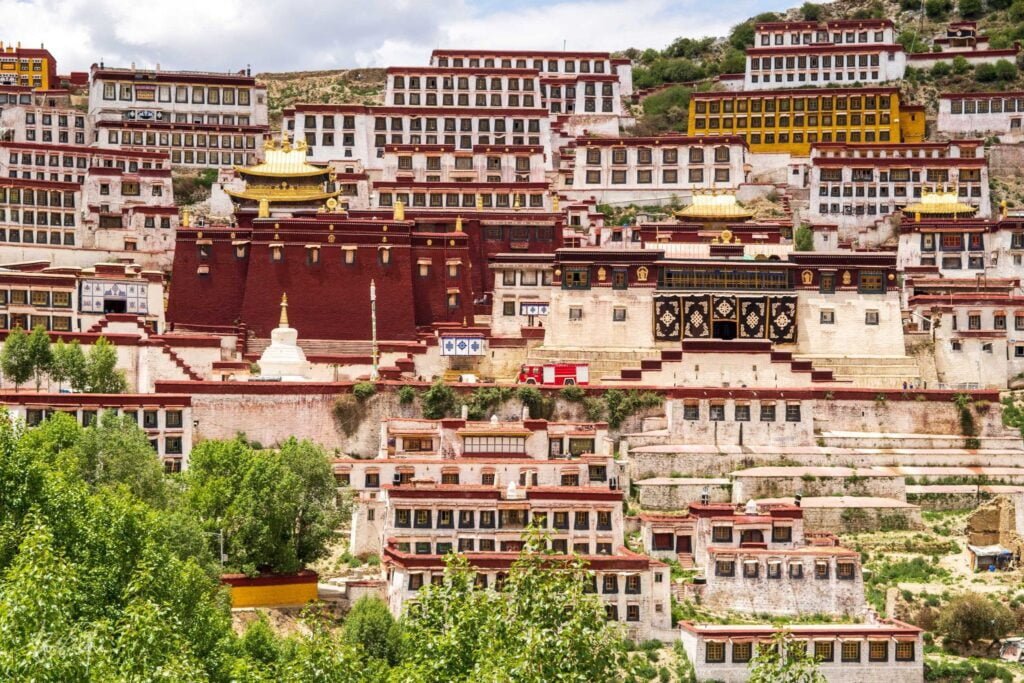
- Total area: 150,000 square meters
- Built area: 77,500 square meters
- Orientation: Facing east from the western slope
- Structures: Numerous sutra halls, chapels, and monastic residences
The monastery contains 43 Khamtsen (regional monastic houses) and nine debating courtyards, where monks traditionally engage in philosophical debate throughout different seasons — a hallmark of Gelug education.
Today, Ganden is recognized as a National Key Cultural Relic Protection Unit, highlighting its immense historical and cultural value.

Architecture: A Palace Built Into the Mountain
Ganden Monastery exemplifies traditional Tibetan Buddhist architecture, designed to harmonize with the rugged mountain terrain. Instead of dominating the landscape, the monastery appears to rise naturally from it — almost like a sacred palace carved into the hillside.
Its two primary structures are:
- The Main Assembly Hall (Tshomchen)
- The Tantric College
Both buildings showcase centuries of artistic craftsmanship, religious symbolism, and architectural mastery.
Main Assembly Hall (Tshomchen)

Also known as the Lachi Hall, the Main Assembly Hall was first constructed in 1409 and remains the spiritual heart of Ganden.
Key Features
- Supported by 108 massive pillars
- Covers approximately 1,960 square meters
- Measures 44.7 meters deep and 43.8 meters wide
- Can host 3,300 monks chanting simultaneously
Originally built as a three-story structure with the help of Taktse Dzongpon Sonam Dorje in 1720, the hall later gained a magnificent golden roof added by King Labsangkha in 1749. Further expansions by Jigme Dorje gave the hall the grandeur visitors admire today.
Sacred Treasures Inside
The hall is primarily dedicated to a statue of Jampa (Maitreya) Buddha, the future Buddha, alongside gilded bronze statues including Tsongkhapa. One of its most revered features is the “Ganden Golden Throne,” supported by five golden lions. This throne symbolizes the spiritual authority established by Tsongkhapa for the Gelug tradition.
Nearby, a smaller chamber houses exquisitely painted sculptures depicting Tushita Heaven, the celestial realm of Maitreya.
Visitors will also find:
- The meditation throne of Tsongkhapa
- Complete sets of the Kangyur and Tengyur, the Tibetan Buddhist canon, written in pure gold
- Rare Ming Dynasty cultural relics
A particularly unusual pillar stands slightly raised from the ground — about the thickness of a palm. Pilgrims traditionally touch its base while praying, believing it brings good fortune and blessings.
Yangpachen Sutra Hall
Located to the left of Tsokchen Hall, the Yangpachen Sutra Hall is a striking four-story building supported by 72 columns and covering roughly 800 square meters. Construction began in 1409 and was completed in 1416, with a golden dome later added in 1610 by Panchen Lobsang Chokyi Gyaltsen.
The hall is named after a massive sacred stone believed to have been transported from the Yangpachen region in India, adding to its mystical reputation.
Statue of Thukwang Tsechenma
The hall enshrines a magnificent gold-plated bronze statue of Thukwang Tsechenma, regarded as an incarnation of Avalokiteshvara (Guanyin Bodhisattva). The statue is richly decorated with pearls and gemstones and is said to be even taller than the revered Jowo Sakyamuni statue in Jokhang Temple.
Dharma Protector Temple
Within the sutra courtyard stands a dramatic clay statue of Vajra Bhairava, depicted with:
- A buffalo head
- Nine faces
- Thirty-four arms
- Sixteen legs
The deity tramples demons while holding ritual instruments, embodying fierce compassion and the power to overcome obstacles.
The temple also contains:
- 32 statues of Dharma protectors such as Damchen Choeje and Mahakala
- 62 auspicious wheel statues on one side
- Yoga deities on the other
- 13 tantric deities and three intricate mandalas
Many statues are cast in silver or crafted from gilt copper, while vibrant murals, towering banners, and elaborately painted beams create an atmosphere reminiscent of a celestial dragon palace.
Serdung Lhakhang — The Tomb of Tsongkhapa
Situated on the highest level of the Yangpachen complex, Serdung Lhakhang is the sacred hall that houses the reliquary of Je Tsongkhapa. This three-story structure spans about 360 square meters and was constructed in 1420 by his chief disciple Darma Rinchen (1364–1432) along with other followers.
To honor their teacher, they built a magnificent silver stupa, reportedly using 900 taels of silver, creating a fitting shrine for one of Tibet’s greatest spiritual reformers.
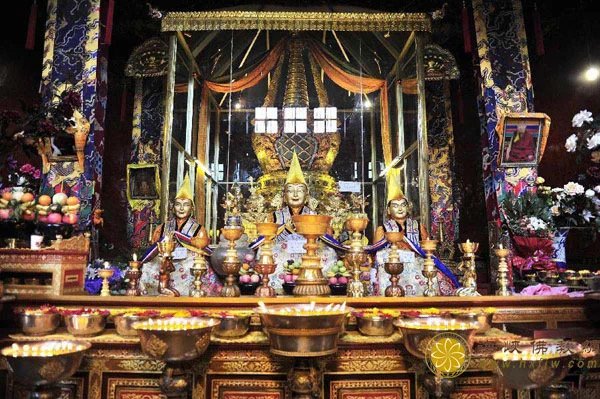
Serdung Lhakhang — The Golden Stupa of Je Tsongkhapa
Over the centuries, the sacred tomb of Je Tsongkhapa has been carefully preserved and enhanced by generations of spiritual leaders. Successive Dalai Lamas, Panchen Lamas, and Ganden Tripas undertook restoration efforts, ensuring that the pagoda worship hall remained a radiant symbol of the Gelug tradition.
The stupa itself gradually transformed into a masterpiece of devotion and artistry:
- Panchen Lama Lobsang Choje crowned the stupa with a gold-plated copper cap.
- The 50th Ganden Tripa, Jatral Gendun Phuntsok, covered the structure in pure gold foil.
- Lobsang Tenzin, grandson of Gushi Khan, famously dedicated the revenue from one year of taxation in the Qinghai region to gild the tower and decorate it with precious jewels.
These offerings elevated the reliquary into a magnificent golden tower, reflecting both spiritual reverence and exceptional craftsmanship.
Surrounding Stupas and Sacred Relics
Flanking Tsongkhapa’s golden pagoda are the silver stupas of Kedrup Gelek Pelsang and other revered lineage masters. In keeping with tradition, each Ganden Tripa has a tomb stupa constructed in this hall after passing away. Today, the hall houses 95 grand stupas, creating an awe-inspiring atmosphere of continuity and lineage.
The 13th Dalai Lama, Thupten Gyatso, further enhanced the site by building the gatehouse of the Golden Pagoda Hall and restoring the stupa, giving the sanctuary an even more solemn and majestic presence.
Inside the hall, visitors can discover remarkable sacred art, including:
- Statues of Red and Yellow Manjushri, symbolizing transcendent wisdom
- Graceful deity figures with rounded features
- 23 silk-woven thangka scrolls, known as the Ganden Embroidered Thangkas
Another treasured relic is the Tooth Pagoda of Tsongkhapa, a small stupa about one cubit high that enshrines the master’s teeth alongside statues of Manjushri Bodhisattva — a deeply revered object for pilgrims.
Trithok Lhakhang — Tsongkhapa’s Living Quarters
Known in Tibetan as “Tritokang,” Trithok Lhakhang served as the residence and secret meditation retreat of Tsongkhapa, as well as later Ganden Tripas.
Originally built in 1409 by Sonam Dorje, the hall was expanded in 1720, and a golden roof was added during the reign of the Seventh Dalai Lama, enhancing its visual prominence within the monastery.
Sacred Objects and Statues
The hall houses several important gilded bronze statues, including:
- Manjushri Bodhisattva – embodiment of wisdom
- Tara – the compassionate savior
- Avalokiteshvara – the bodhisattva of compassion
It is also home to powerful tantric mandalas used in advanced Gelug practices. Among them is the Yidam Kyikor, associated with tantric meditation, along with four major mandalas representing:
- Vajra deities
- Yamantaka (Jikje) — the conqueror of death
- Vajrapani (Chyakna Dorje) — symbol of spiritual strength
- Demchok (Chakrasamvara)
Remarkably, the hall preserves personal belongings of Tsongkhapa, including:
- His robes and meditation cushions
- Official seal
- Ritual objects
Because of these treasured garments, the temple is sometimes called the “Clothes Hall.”
Private Chambers and Protector Shrine
Within the complex are three bedrooms once associated with:
- The Supreme Master Tsongkhapa
- Past Dalai Lamas
- Former Ganden Tripas
The Dharma Protector chapel contains unusual and deeply symbolic artifacts. Among them are protector masks crafted by Kedrup Je, reportedly using materials connected to cows that supplied ghee for Tsongkhapa. The chapel also preserves thangka portraits of protector deities attributed to Kedrup Je himself, reflecting extraordinary devotion.
Lima Shrine — Honoring Shakyamuni and Tantric Practice
The Lima Shrine is dedicated to a revered statue depicting Shakyamuni Buddha descending to bless Tsongkhapa, an offering traditionally attributed to King Drakpa Gyaltsen.
Surrounding this central image are over 100 statues representing deities connected with Tsongkhapa’s tantric practices. Many belong to powerful Vajra mandalas symbolizing:
- Spiritual strength
- Virtue
- Fearlessness
- Enlightened activity
The shrine provides insight into the depth of tantric traditions preserved within Ganden Monastery.
Shakya Nengren Hall
The Shakya Nengren Hall is devoted primarily to images of Shakyamuni Buddha and other enlightened figures. The hall contains more than ten statues, each reflecting refined craftsmanship and devotional artistry, further emphasizing the monastery’s role as a living center of Buddhist faith and scholarship.
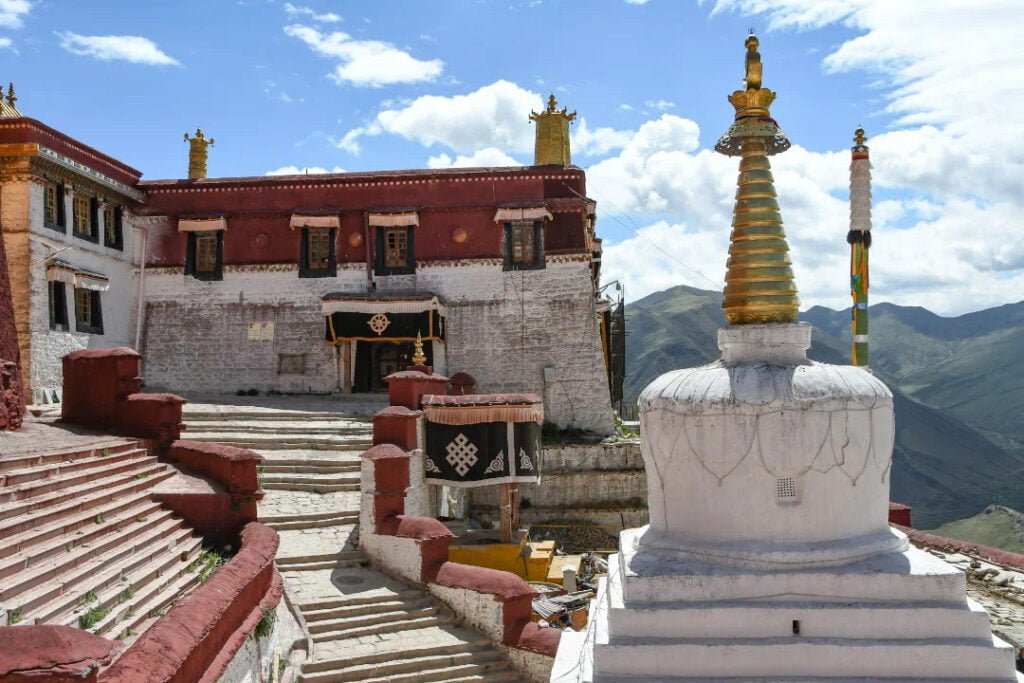
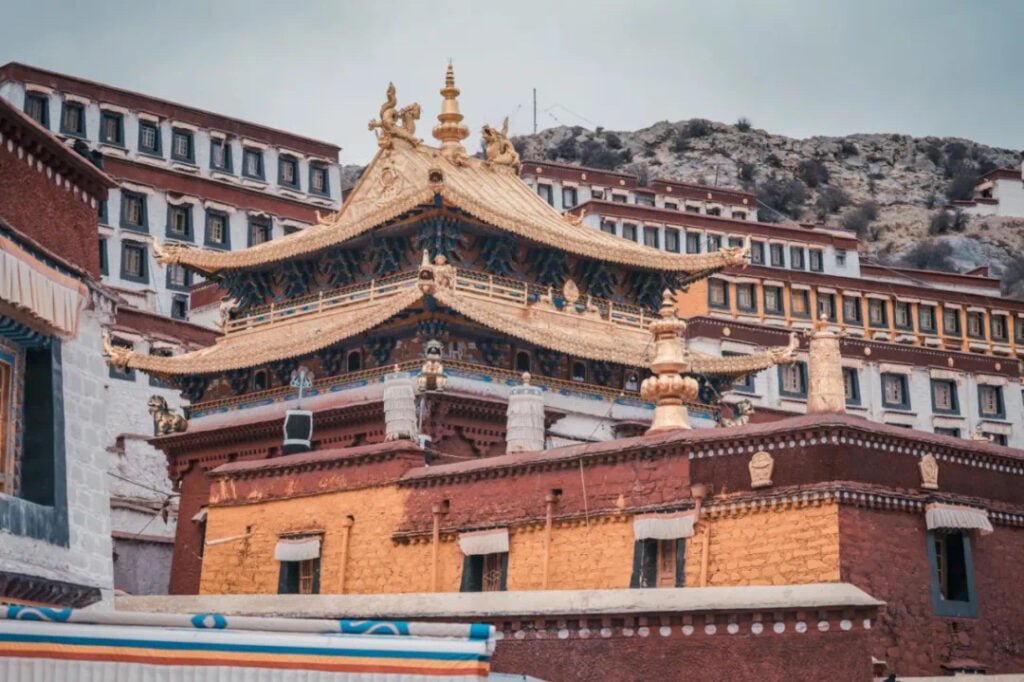
Ngamcho Lhakhang — A Sanctuary of Sacred Relics
Ngamcho Lhakhang is one of the most spiritually treasured chapels within Ganden Monastery. The temple preserves several rare relics associated directly with Je Tsongkhapa, making it a deeply revered pilgrimage site for devotees.
Among its most remarkable treasures are:
- Tsongkhapa’s teeth and sacred relics
- A naturally formed stone statue of Manjushri Bodhisattva
- Tsongkhapa’s principal meditational deity
- A revered thangka of Dukhar (White Umbrella Goddess)
- A clay statue of Tsongkhapa personally shaped by Kedrup Je
The temple also houses extraordinary devotional artifacts, including ivory Buddha statues traditionally believed to have been carved in ancient times, statues of Nagarjuna formed from sacred river clay, and miniature Tsongkhapa figures said to have been hidden within strands of hair. These objects continue to inspire awe among pilgrims and visitors alike.
Dratsang and Colleges of Ganden Monastery
Ganden Monastery developed into a major monastic university with two primary Tantric colleges, established by Tsongkhapa’s disciples. These institutions became centers of advanced philosophical debate, ritual practice, and scholastic training.
Monastic Infrastructure
- Each major chanting hall accommodates about 1,500 monks
- Over 20 smaller chanting halls belong to different Khangtsens (regional houses)
- Each smaller hall can host around 200 monks
- Several administrative palaces were later constructed by regional leaders
Together, these facilities allowed Ganden to function as one of the most influential learning centers in Tibetan Buddhism.
Jangtsey College
Jangtsey Dratsang was built by Horton Namga Palwa, a disciple of Tsongkhapa, and is traditionally associated with Kedrup Je, the second Ganden Tripa.
Architectural Highlights
- Supported by 84 columns
- Covers approximately 930 square meters
- Can accommodate up to 1,500 monks
Inside the college are statues depicting:
- Shakyamuni Buddha teaching the Dharma
- Protective goddesses
- Sacred Vajra mandalas
- Powerful tantric deities symbolizing strength, virtue, and fearlessness
The college played a crucial role in preserving the intellectual and ritual traditions of the Gelug school.
Shartsey College
Founded by Sherpa Rinchen Gyaltsen, another direct disciple of Tsongkhapa, Shartsey Dratsang stands as an equally important academic institution within Ganden.
Key Features
- Scripture hall supported by 88 columns
- Covers roughly 1,000 square meters
- Designed to host 1,500 monks
Both Jangtsey and Shartsey Colleges focus heavily on the study of Tsongkhapa’s classical teachings, often referred to as the teachings of the “masters and disciples.”
The monastery’s academic and administrative affairs are overseen by the Dratsang Khenpo, also known as Choje. Historical records note that Tsongkhapa himself delivered teachings at Ganden dozens of times, reinforcing its role as a premier center of Buddhist scholarship.
Treasures and Murals of Ganden Monastery
Ganden is renowned not only for its spiritual heritage but also for its vast collection of artistic and historical treasures.
Notable relics include:
- Treasure armor bestowed by Emperor Qianlong
- Tsongkhapa’s teaching seat
- The meditation bed associated with his passing
- Ancient silk weavings
- Cushions and ceremonial objects linked to Gushi Khan
The monastery’s murals and sculptures are celebrated for their intricate detail, vibrant colors, and symbolic depth, offering insight into centuries of Tibetan artistic tradition.
Ganden Embroidered Thangka Festival
One of the monastery’s most spectacular cultural events is the Ganden Embroidered Thangka Festival, showcasing large thangkas created using refined Kesi embroidery techniques.
In the early 15th century, Emperor Yongle presented Tsongkhapa with 24 exquisite thangkas portraying the Eighteen Arhats, Tara, floral motifs, and sacred imagery. Tsongkhapa treasured these works and incorporated them into the monastery’s ritual life.
Festival Highlights
- Held annually on the 15th day of the sixth month in the Tibetan calendar
- Thangkas were traditionally displayed for seven days in major halls such as Lachi Hall, Trithokang, and the Tomb Stupa Hall
- Monks gather for scripture recitation, offerings, and prayers
- Pilgrims from regions including Sichuan, Qinghai, Gansu, and central Tibet attend
Today, the exhibition remains a magnificent expression of devotion and artistic heritage.
Ganden Ngamchoe — The Festival of Lights
Ganden Ngamchoe, often called the Lantern Festival, commemorates the parinirvana of Tsongkhapa. It is observed on the 25th day of the tenth Tibetan lunar month.
During the celebration:
- A massive Buddha image measuring roughly 26 meters long and 10 meters wide is displayed
- Thousands of butter lamps illuminate rooftops
- Lanterns glow along corridors and windows, creating a star-like brilliance
Monks conduct solemn rituals that include offerings, lamp lighting, sutra chanting, and prostrations — transforming the monastery into a radiant field of devotion.
Ganden Drubchu — Tantric Ritual Tradition
Ganden Drubchu (sometimes associated with the Taktse area) is an annual tantric observance held from the 3rd to the 15th day of the second Tibetan month.
The tradition traces back to 1417, when the Yangpachen Sutra Academy dedicated itself to tantric studies and consecrated sacred images.
After attending prayer ceremonies in Lhasa, Tsongkhapa returned to Ganden to transmit advanced tantric initiations, including teachings related to:
- Guhyasamaja
- Chakrasamvara (Great Bliss Vajra)
- Yamantaka
On the 14th day, special offerings are made to pray for favorable weather and abundant harvests — linking spiritual practice with the wellbeing of society.
This event marked the formal establishment of tantric foundations within the Gelug tradition at Ganden.
Ganden Monastery Cliff Statues
Carved into the rocky forested slopes near the monastery are the remarkable Ganden cliff statues — a collection of 33 relief and line-carved images that vary from miniature works to life-sized figures.
Inside a meditation cave rising from the cliff are six notable statues:
- Tsongkhapa at the center, about 1.72 meters tall
- Dromtonpa to the left
- Atisha to the right
- Palden Lhamo depicted in a fierce protective form
- Images of Shakyamuni Buddha and Amitayus
Tsongkhapa is shown wearing the yellow hat and seated in the lotus posture, forming the Dharma Wheel mudra, symbolizing the turning of the teachings.
One particularly small statue — only 26 centimeters high — is treasured for its smooth, jade-like surface and is traditionally attributed to the craftsmanship of Kedrup Je.
Lama Tsongkhapa — Founder of Ganden Monastery
Je Tsongkhapa (1357–1419), born Lobsang Drakpa, is one of the most influential figures in Tibetan Buddhist history. His name conveys the meaning “noble wisdom,” reflecting his lifelong pursuit of knowledge and spiritual clarity.
Early Life and Education
Born in the Tsongkha region of present-day Qinghai, Tsongkhapa displayed spiritual promise from a young age. He traveled to central Tibet as a teenager, studying with masters from multiple traditions, including:
- Kadam
- Sakya
- Kagyu
- Shalu
By his late twenties, he had taken full monastic ordination and mastered numerous classical texts, earning widespread respect as a scholar.
Religious Reform
During Tsongkhapa’s time, monastic discipline in some regions had weakened. Determined to restore integrity, he launched a reform movement centered on:
- Strict observance of monastic vows
- Structured philosophical study
- Balanced practice of sutra and tantra
The Great Prayer Festival (Monlam) in 1409 marked a turning point, leading directly to the founding of Ganden Monastery and the emergence of the Gelugpa school.
Literary Legacy
Tsongkhapa authored more than 160 works across 19 volumes, including enduring classics such as:
- Lamrim Chenmo (The Great Treatise on the Stages of the Path)
- Ngagrim Chenmo (The Great Treatise on Tantra)
He also encouraged his disciples to establish major monasteries such as Drepung and Sera, ensuring the continuity of his teachings.
Regarded by followers as a manifestation of Manjushri, Tsongkhapa is often honored as the “Second Buddha.” His philosophical insights and institutional reforms continue to shape Tibetan Buddhism to this day.