
Qinghai Lake: Discover the Stunning Beauty of the Tibetan Plateau’s Largest Lake
Qinghai Lake is one of the most breathtaking natural wonders on the Tibetan Plateau. Located in northwestern China’s Qinghai Province, this vast high-altitude lake is famous for its deep blue waters, wide grasslands, and rich cultural heritage.
Also known as Kokonor or Koko Nor, meaning “Blue Lake,” Qinghai Lake sits at an elevation of about 3,260 meters above sea level. With a surface area of around 4,543 square kilometers, it is not only the largest lake in China but also one of the highest large lakes in the world.
For travelers exploring the Tibetan Plateau, Qinghai Lake offers a unique combination of pristine nature, wildlife, traditional culture, and dramatic landscapes.
Location and Natural Setting of Qinghai Lake
Qinghai Lake lies about two to three hours west of Xining, the provincial capital and main gateway to the plateau. The lake stretches between the regions of Haibei and Hainan prefectures in Qinghai Province.
Surrounded by open grasslands, distant snow-capped mountains, and vast skies, the lake creates a powerful and peaceful atmosphere that attracts visitors from around the world.
The journey to the lake itself is part of the experience. Travelers pass through desert landscapes, alpine valleys, and wide plateaus that once formed ancient routes between the Tang Dynasty and the Tibetan Empire.
Crystal Clear Waters of Qinghai Lake
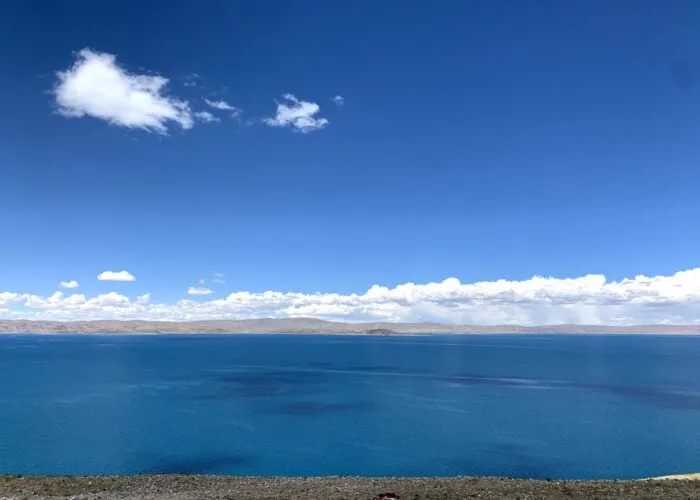
The most striking feature of Qinghai Lake is its crystal-clear water. Under the strong sunlight of the plateau, the lake reflects brilliant shades of turquoise, sapphire, and deep blue.
The water is so clear that visitors can often see sand and stones beneath the surface along the shore. These vivid colors change throughout the day as the sunlight and clouds move across the plateau sky.
Standing beside the lake, the view feels almost endless, with water stretching to the horizon and merging with the sky above.
slands of Qinghai Lake
Several islands rise from the vast waters of Qinghai Lake, each with its own unique significance.
Bird Island
One of the most famous places at the lake is Bird Island. This island is an important stop along Asia’s migratory bird routes.
Every year, thousands of birds gather here, creating one of the most remarkable wildlife spectacles on the plateau. Visitors may see species such as:
- Black-necked Crane
- Bar-headed Goose
The island is actually made up of two small islets commonly called Cormorant Island and Egg Island.
Mahadeya Island
Another famous site in Qinghai Lake is Mahadeya Island, a traditional Buddhist pilgrimage location once known as “the Heart of the Lake.”
In the past, pilgrims could only reach the island during winter when the lake froze solid. The island is extremely large, and traditional accounts say that walking around it completely could take more than twenty days.
For Tibetan and Mongolian communities, the island remains a sacred place connected with religious practice and spiritual traditions.
Vast Grasslands Around the Lake
The shoreline of Qinghai Lake is surrounded by wide plateau grasslands. During warmer months, these open fields become lush and green, creating a peaceful landscape where herds of animals graze freely.
Travelers may see:
- Yaks grazing near the lakeshore
- Sheep and cattle herds across the plains
- Local herdsmen riding horses across the grasslands
Wildflowers bloom across the fields in spring and summer, turning the grasslands into a colorful natural tapestry.
Wildlife Around Qinghai Lake
The lake and surrounding wetlands support a diverse ecosystem.
Inside the lake live various aquatic species such as fish and shrimp, while the surrounding grasslands and marshes provide habitats for many wild animals.
Wildlife seen near Qinghai Lake may include:
- Tibetan Antelope
- Tibetan Wild Ass
For nature lovers and photographers, Qinghai Lake offers one of the best opportunities to observe wildlife on the Tibetan Plateau.
Cultural Heritage Around Qinghai Lake
Beyond its natural beauty, Qinghai Lake is also rich in ethnic culture and history.
The region is home to Tibetan and Mongolian communities who have lived on the plateau for centuries. Their traditions, clothing, and food reflect a deep connection with the land.
Visitors can experience local culture by exploring nearby historical sites such as:
- Ta’er Monastery, one of the most important Tibetan Buddhist monasteries in the region
- The remains of Qinghai Lake Ancient City, which reflect the area’s long historical development
These cultural landmarks help tell the story of the plateau and its diverse peoples.
Seasonal Beauty of Qinghai Lake
Qinghai Lake changes dramatically throughout the year, offering different landscapes in every season.
Spring
Spring brings new life to the plateau. Grasslands begin turning green, and wildflowers appear across the fields.
Migratory birds also return to the lake during this time.
Summer
Summer is the most popular season to visit Qinghai Lake. Clear skies, bright sunshine, and fresh plateau air create perfect conditions for travel.
Large rapeseed flower fields bloom around the lake, covering the land in brilliant yellow and creating a dramatic contrast with the deep blue water.
Autumn
Autumn brings a quieter atmosphere. The grasslands turn golden, and the lake becomes calm and reflective under the wide plateau sky.
Winter
In winter, the landscape transforms completely. Snow covers the grasslands, and parts of the lake may freeze, creating a peaceful and almost otherworldly scenery.
Cycling Around Qinghai Lake
One of the most popular travel experiences at Qinghai Lake is cycling the 360-kilometer road that circles the lake.
Cyclists ride through:
- Wide grasslands
- Flower fields
- Small lakeside villages
The route offers constant panoramic views of the lake and surrounding plateau landscapes. Many travelers consider it one of the most scenic cycling routes in China.
Geological Origins of Qinghai Lake
The formation of Qinghai Lake dates back approximately 210,000 years. It developed as a rift lake during the uplift of the Qinghai–Tibet Plateau.
Originally, the lake was connected to the Yellow River and contained freshwater. Around 150,000 years ago, geological changes blocked the outflow, turning the lake into a closed basin lake.
Over time, evaporation increased the lake’s salinity, creating the alkaline water that characterizes Qinghai Lake today.
Early Civilizations Around Qinghai Lake
Human history around Qinghai Lake stretches back thousands of years. Early nomadic groups, including the Qiang tribes, lived in this region and may have been ancestors of early Tibetan peoples.
During the Han Dynasty, Chinese forces established military outposts near the lake to manage relations with nomadic groups in the region.
Later, the area became part of the Tuyuhun Kingdom, which controlled the region for several centuries.
Tibetan, Mongol, and Silk Road Connections
By the 7th and 8th centuries, the powerful Tibetan Empire expanded its influence into the Qinghai Lake region. Traders and pilgrims traveled near the lake along routes connected to the Silk Road.
In the 13th century, the Mongol leader Genghis Khan conquered the area, incorporating it into the vast Mongol Empire.
These historical events turned Qinghai Lake into an important cultural crossroads between Tibetan, Mongolian, and Chinese civilizations.
Religious Importance of Qinghai Lake
Qinghai Lake holds deep spiritual significance for Tibetan Buddhists and Mongolian communities.
The lake is connected with the life of Tsongkhapa, who was born near the lake in 1357. His teachings later influenced the spread of Tibetan Buddhism across Tibet and Mongolia.
Every 12 years during the Horse Year, thousands of pilgrims perform a traditional kora, or circumambulation, around the lake. The journey can take:
- About 8 days on horseback
- Up to 23 days on foot
Along the route, colorful prayer flags flutter in the wind, reflecting the enduring spiritual traditions connected with this sacred lake.
Visiting Qinghai Lake Today
Today, Qinghai Lake remains one of the most remarkable destinations on the Tibetan Plateau. Travelers can reach the lake by flying or taking a train to Xining, followed by a short drive to the lakeshore.
Visitors often combine Qinghai Lake with journeys across the Qinghai–Tibet Plateau, exploring monasteries, grasslands, and high-altitude landscapes that define this unique region.