
Tibet Train Toilets and Washrooms: Clean, Modern, and Comfortable Facilities on the Qinghai–Tibet Railway
Travelling to Lhasa by train is one of the most memorable journeys in the world. Many travellers are curious about the facilities on board, especially the toilets and washrooms during such a long trip across the plateau. Fortunately, trains travelling to and from Lhasa offer reliable hygiene standards and well-maintained facilities. From modern vacuum toilets to regularly cleaned washrooms, the experience is generally comfortable and suitable for long-distance travel.
Two Types of Toilets on Tibet Trains
Every train carriage on the Tibet railway typically has two toilets located at each end. These toilets are designed to meet different passenger preferences.
On one side, there is an Asian-style squat toilet, which is commonly used on many long-distance trains in China. On the other side, passengers can find a Western-style sitting toilet, offering more familiar comfort for international travellers.
Both types are carefully maintained by train attendants to ensure that they remain clean throughout the journey. Toilet paper is also available, which adds convenience for passengers.
In most cases:
- Hard sleeper and hard seat carriages mainly use squat toilets with a compact space of about 1–1.5 square meters.
- Soft sleeper carriages usually provide both one sitting toilet and one squat toilet. These are typically larger and cleaner.
- Some trains also include accessible toilets for passengers with disabilities, which are wider and equipped with handrails and emergency buttons.
These toilets use vacuum waste systems, allowing them to function properly even in the low air pressure of the Tibetan Plateau. This system prevents odors from escaping and ensures environmentally friendly waste handling.
Clean Bathrooms and Shared Sink Areas
Passengers will also find tidy washroom and sink areas next to the toilets. These spaces are shared facilities used by travellers from several compartments.
Each sink area is typically shared by around 32 passengers, so it can become quite busy, especially in the morning when many people are washing their faces or brushing their teeth.
Despite the heavy usage, attendants regularly clean these areas to maintain hygiene.
The sink sections normally include:
- Three wash basins
- Push-type water faucets for easy operation
- Waste bins and cleaning supplies
These areas provide cold or room-temperature water only. Hot water is not available at the sink for washing.
Because toiletries are not supplied on Tibet trains, travellers are advised to bring their own personal hygiene items. A small towel purchased before boarding can make the journey more comfortable.
Modern Technology Used in Tibet Train Toilets
Modern trains serving Lhasa feature improved facilities that focus on comfort, safety, and convenience.
The toilets are built with glass fibre–reinforced plastic structures and marble countertops, giving them a clean and modern appearance. These materials are durable and easy to maintain, helping staff keep the washrooms in good condition.
Several practical features are also installed to support different passenger needs:
- Emergency call buttons
- Baby care desks
- Baby diaper changing beds
- Folding armrests for support
- Accessible design for disabled passengers
Washrooms also include items that support basic hygiene, such as:
- Faucets and wash basins
- Toilet paper
- Cleaning supplies
- Scented deodorizing balls
Many toilets also have small net pockets for hanging bags, making it easier for travellers to keep personal items off the floor.
Continuous Improvements in Train Facilities
Train facilities in China have improved significantly over the past few decades. In the 1990s, large-scale upgrades were carried out across the railway system, replacing outdated equipment and improving passenger comfort.
During that period, train toilets were upgraded from basic systems to plastic steel urinals, and later to stainless steel facilities, which improved durability and appearance.
Today’s newer trains use advanced vacuum toilet systems with strong suction and water ejection, which helps maintain cleanliness and reduces odors.
These improvements have made long-distance train travel much more comfortable, especially on routes crossing remote regions like the Tibetan Plateau.
Hygiene Standards on Lhasa Train Routes
Trains departing from or arriving in Lhasa — including those running on the Qinghai–Tibet Railway and the Lhasa–Nyingchi Railway — generally maintain hygiene and service levels above the average for long-distance trains in China.
Passengers can expect reliable facilities throughout the journey, including toilets, hot drinking water, clean carriages, and regular cleaning.
Cleanliness During the Journey
Cleanliness changes slightly depending on the time of day:
- At departure: Toilets are usually very clean with no odor or standing water.
- Daytime: Cleaning staff check and clean the washrooms about every 1–2 hours.
- Peak times: Between 7–9 AM and after dinner, the toilets may become busier and slightly less tidy.
- Night time: Cleaning may be less frequent, and very early morning usage may feel less clean.
Newer trains, such as those running on the Lhasa–Nyingchi Railway, often maintain even higher hygiene standards with frequent inspections.
Hot Water Availability on Tibet Trains
Although hot water is not available at the wash basins, trains provide 24-hour hot drinking water.
At both ends of each carriage, passengers will find electric water boilers, which supply boiling water throughout the journey. This is very useful for:
- Drinking hot water
- Making tea
- Preparing instant noodles
Some trains also provide disposable paper cups, though availability may vary by route.
However, passengers should note that there are no shower facilities on Tibet trains, so it is best to take a shower before boarding.
Clean and Comfortable Carriage Environment
The general environment inside Tibet trains is usually clean and organized.
Carriages are regularly cleaned, including:
- Floors
- Seats
- Sleeper berths
- Trash areas
Passengers rarely notice unpleasant odors inside the train.
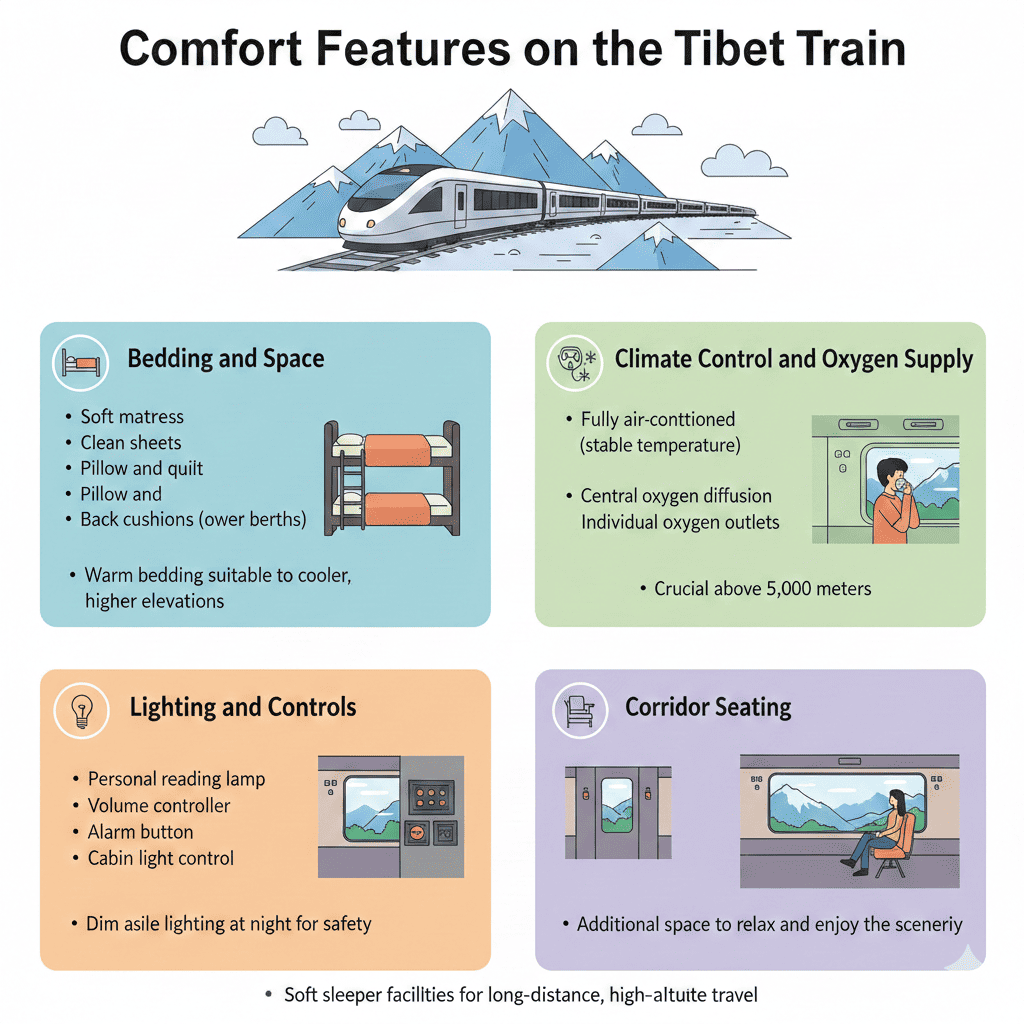
Another important feature is the oxygen supply system, which helps passengers adjust to the high altitude. The trains use two types of oxygen support:
- Diffuse oxygen supply throughout the carriage
- Individual oxygen outlets at sleeping berths
When the train reaches higher altitude areas, the oxygen system automatically increases supply to improve passenger comfort.
Newer train models, especially those on the Lhasa–Nyingchi route, are quieter, more modern, and more spacious, offering an experience closer to high-speed trains in mainland China.
Cleaning Staff and Service Quality
Cleaning staff and train attendants play an important role in maintaining hygiene during the journey.
Their responsibilities include:
- Regularly cleaning carriage floors
- Removing trash
- Maintaining toilet cleanliness
- Monitoring washroom conditions during busy hours
Even on very long routes, such as Lhasa to Beijing or Lhasa to Shanghai, the staff ensure that the train remains generally tidy throughout the trip.
Train attendants on the Qinghai–Tibet and Lhasa–Nyingchi routes are also experienced in handling high-altitude travel. Many of them are trained to respond to altitude sickness, oxygen system issues, and equipment problems.
Some staff members can communicate in both Chinese and Tibetan, which helps passengers travelling in the region.
Practical Tips for Using Train Toilets on the Tibet Route
To make the journey more comfortable, travellers can follow a few simple tips.
Use the toilets during off-peak times
Early morning between 7–9 AM and after dinner are the busiest periods. Using the washroom outside these hours usually means cleaner facilities and shorter waiting times.
Bring personal hygiene supplies
Since toiletries are not provided, it is useful to bring:
- Wet wipes
- Dry tissues
- Disposable toilet seat covers
- Hand sanitizer
- A small towel
Prepare for cold-water washing
Because only cold water is available at the sinks, many passengers prefer to use wet wipes or hand sanitizer for convenience.
Use the hot water boilers
The electric water boilers provide plenty of boiling water, making it easy to prepare instant meals or enjoy hot drinks during the journey.
Maintain realistic expectations
On any long-distance train, the facilities cannot remain perfectly spotless at all times. However, Tibet trains generally stay clean, functional, and comfortable enough for the long journey to or from Lhasa.