
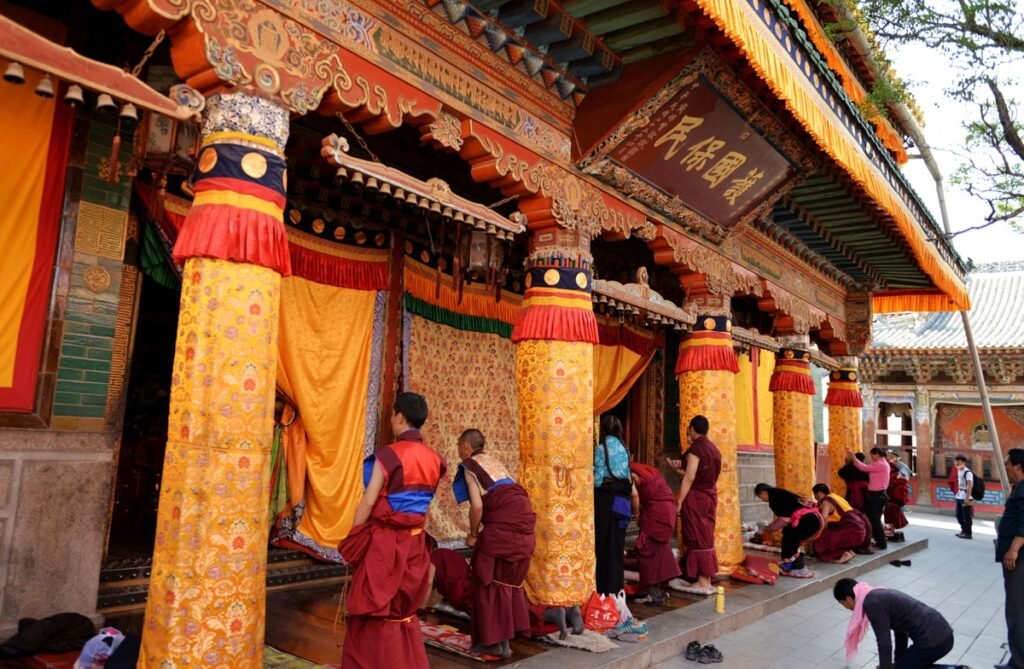
Kubum Monastery, (སྐུ་འབུམ་བྱམས་པ་གླིང་) also known as Kumbum Monastery or Ta’er Monastery, (塔尔寺) is one of the most important Tibetan Buddhist monasteries in China. Located in Huangzhong County, Qinghai Province, about 25 kilometers southwest of Xining, it stands as a spiritual, cultural, and architectural landmark of the Gelugpa (Yellow Hat) sect of Tibetan Buddhism.
Set in a narrow valley on the northeastern edge of the Qinghai–Tibet Plateau, Kubum Monastery is surrounded by mountains and offers visitors a deep immersion into Tibetan religious life without entering the Tibet Autonomous Region.
Birthplace of Tsongkhapa, Founder of the Gelug School
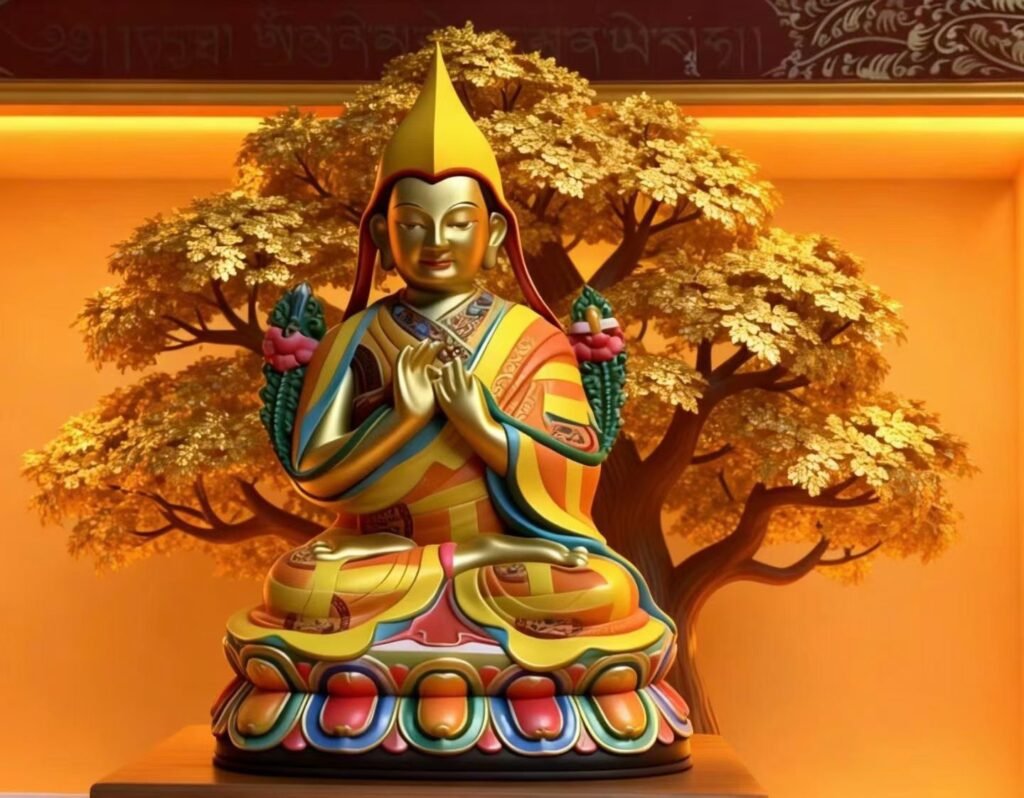
Kubum Monastery holds exceptional religious significance as the birthplace of Je Tsongkhapa (1357–1419), the revered founder of the Gelug tradition. According to legend, a sandalwood tree known as the “Tree of Great Merit” grew on the spot where Tsongkhapa was born. Its leaves were said to bear images of Buddhas and sacred Tibetan syllables, making the site instantly holy.
In 1379, Tsongkhapa’s mother and disciples built a stupa (Julian Pagoda) at this sacred location. Later, in 1583, the 3rd Dalai Lama, Sonam Gyatso, formally established Kubum Monastery around the stupa, marking the beginning of its development as a major Gelug monastery.
Historical Development and Expansion
Originally modest in scale, Kubum Monastery expanded steadily over the centuries. During the Ming and Qing dynasties, it grew into a vast monastic complex and became a satellite monastery of Drepung Monastery in Lhasa. By the 20th century, the site included more than 50 halls, over 9,000 rooms, and housed thousands of monks.
Although the monastery suffered severe damage during periods of war and political turmoil, extensive restoration work in recent decades has helped recover much of its original appearance. Today, Kubum Monastery remains an active religious center with around 800 resident monks.
Architecture Blending Tibetan, Chinese, and Amdo Styles
Kubum Monastery is renowned for its unique architectural style, which blends Tibetan, Han Chinese, and local Amdo influences. Built along the mountainside, the complex features grand halls, golden roofs, colorful gates, and wide courtyards.
One of the most iconic structures is the Great Golden Roof Hall, famous for its gilded tiles and elaborate floral designs. The monastery’s layout reflects both spiritual symbolism and practical monastic life, with temples, colleges, and residential quarters harmoniously arranged.
The “Three Treasures” of Kubum Monastery
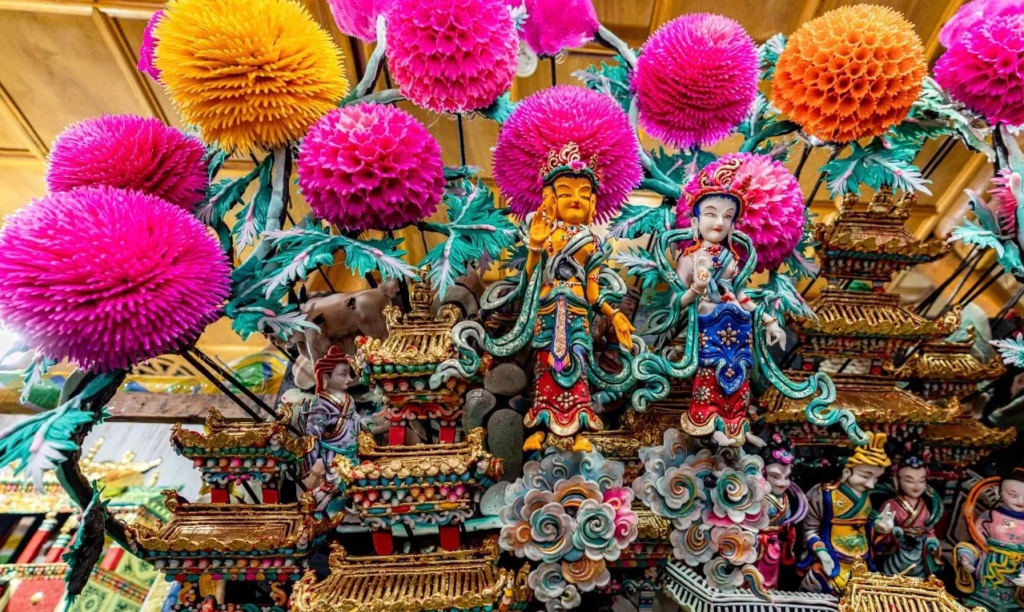
Kubum Monastery is especially famous for its artistic heritage, often referred to as its “Three Treasures”:
Butter Sculptures
Made from yak butter, these intricate sculptures are created during the coldest winter months. Every year, monks produce new designs depicting Buddhist stories, deities, flowers, and animals. The tradition reaches its peak during major festivals.
Murals
The monastery walls are covered with vibrant murals illustrating Buddhist teachings, historical events, and sacred symbols. These paintings are valued for both their religious meaning and artistic quality.
Embroidered Silk Tapestries (Pile Embroidery)
Large silk thangkas, richly embroidered with gold and colored threads, are displayed during important ceremonies and festivals, showcasing extraordinary craftsmanship.
Religious Education and Monastic Life
As one of the six major Gelug monasteries, Kubum Monastery plays a vital role in Buddhist education. It includes four main Buddhist colleges, focusing on:
- Exoteric Buddhist philosophy
- Tantric practices
- Tibetan medicine
- Astronomy and calendrical studies
Visitors can often witness monastic debates, where monks engage in lively philosophical discussions using traditional gestures and reasoning methods. These debates are a core part of Gelug scholastic training.
Festivals and Religious Activities
Kubum Monastery is also a major festival center in Qinghai. The most famous event is the Butter Lamp Festival, held during the Tibetan New Year period. During this time, massive butter sculptures are displayed, monks perform ritual dances, and pilgrims gather from across the region.
Throughout the year, the monastery hosts prayer ceremonies, teachings, and public religious events that attract both devotees and cultural travelers.
Location, Access, and Visitor Tips
Kubum Monastery is located at an altitude of approximately 2,700 meters, making it relatively accessible compared to many Tibetan sites. It can be reached from Xining by bus or taxi in 40–60 minutes, and it is often included in travel routes combining Qinghai Lake and other Amdo Tibetan cultural sites.
Entrance fees are typically around 80 CNY, and guided tours are available. Photography may be restricted in certain halls to preserve the sacred atmosphere. Summer is the most comfortable season to visit, though travelers should still be mindful of altitude.
For those interested in Tibetan Buddhism, Gelug traditions, and Himalayan culture, Kubum Monastery offers an authentic and historically rich experience deeply rooted in faith, art, and scholarship.







dear friend,
me and my uncle is looking forward to travel to Shigatse, Jorra and many other places.
please can you recommend other places including jorra.
cheers