

Nyingchi Mainling Airport: A Complete Travel Guide
Located in southeastern Tibet, Nyingchi Mainling Airport is one of the region’s most strategically positioned and scenic aviation hubs. Sitting at an elevation of around 3,000 meters (9,843 feet), the airport offers travelers a convenient gateway to eastern Tibet’s breathtaking landscapes.
Approximately 400 kilometers from Lhasa and just 120 kilometers from the dramatic Yarlung Tsangpo Grand Canyon, the airport provides easier access to Tibet’s lush valleys and forested highlands. Compared to other high-altitude airports in the region, Nyingchi’s location often means fewer weather-related disruptions, making it a practical choice for travelers heading into Tibet.
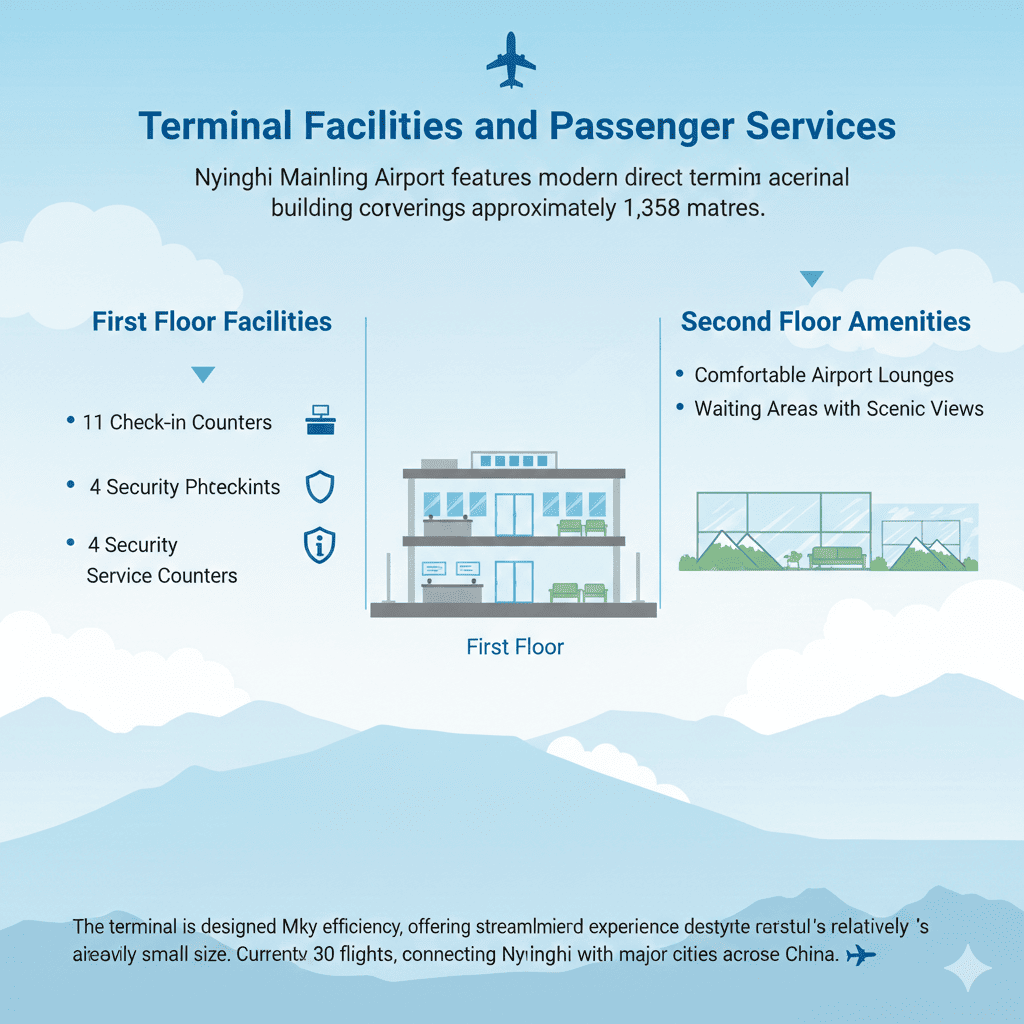
Location, Elevation, and Travel Advantages
At 3,000 meters above sea level, Nyingchi Mainling Airport sits lower than many Tibetan airports. This relatively moderate altitude can make arrival more comfortable for travelers adjusting to high elevations.
Its proximity to major attractions in eastern Tibet makes it especially appealing for visitors planning to explore:
- The Yarlung Tsangpo Grand Canyon
- Nyingchi’s alpine forests and river valleys
- Scenic overland routes connecting to Lhasa
The airport’s geographic position also helps reduce common travel disruptions that affect other parts of the Tibetan Plateau, offering a smoother entry point into the region.
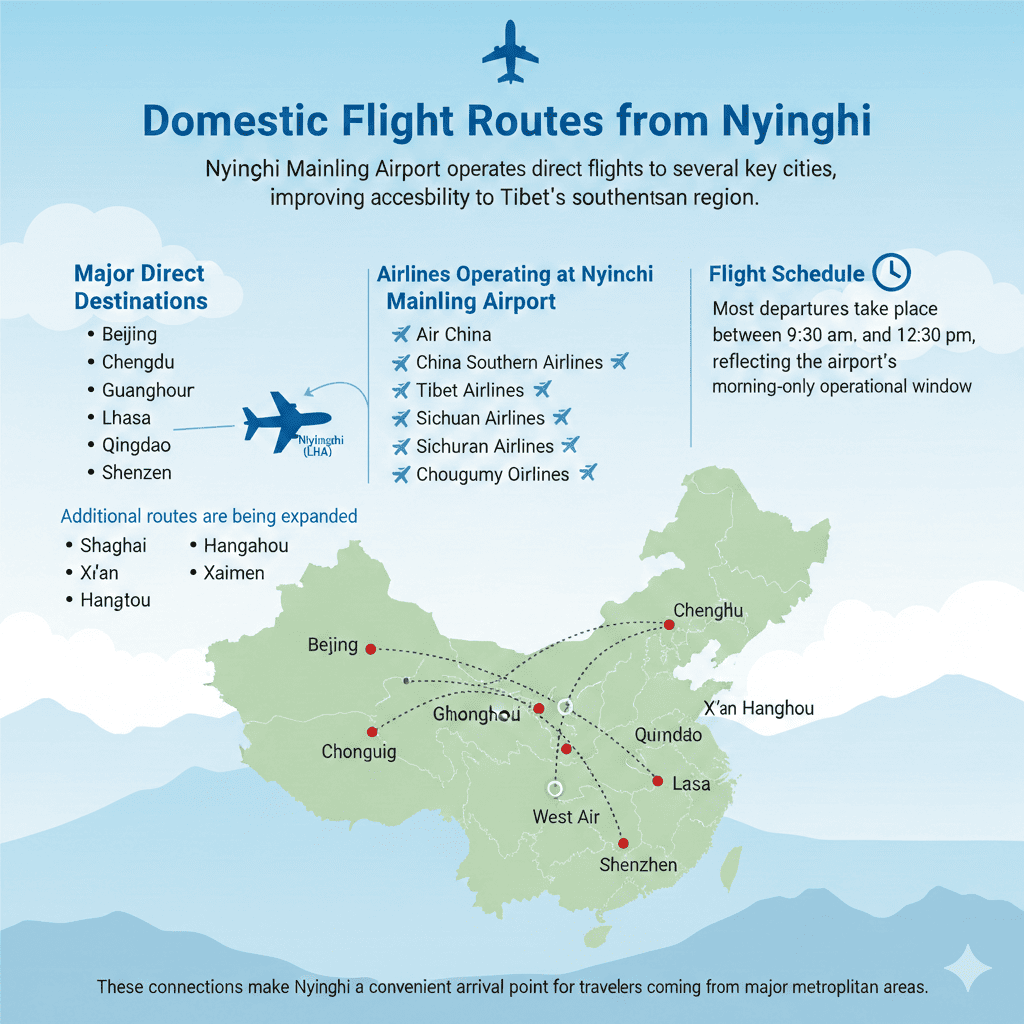
Operating Conditions and Flight Limitations
Due to the surrounding mountainous terrain and rapidly changing weather patterns, flight operations at Nyingchi Mainling Airport are primarily limited to morning hours. Pilots must navigate complex topography, which requires optimal visibility and stable conditions.
As a result, the airport operates for roughly 100 days per year under suitable weather conditions. Travelers are advised to monitor schedules closely and allow flexibility when planning trips to or from Nyingchi.
Military and Strategic Importance of Nyingchi Mainling Airport
Located in southeastern Tibet, Nyingchi Mainling Airport holds both civilian and military significance due to its proximity to the Himalayan frontier. Originally developed as a regional passenger airport, it has gradually evolved into a dual-use facility capable of supporting both commercial aviation and defense operations.
Its location near the disputed border region between China and India gives it clear strategic value. High-altitude infrastructure in this part of the Tibetan Plateau plays an important logistical role, particularly given the challenging terrain and limited overland access routes.

Strategic Location Near the Himalayan Border
Nyingchi’s geographic position makes it a critical transportation and logistics hub in southeastern Tibet. The airport allows faster movement of personnel, equipment, and supplies across mountainous terrain that would otherwise require lengthy road travel.
Due to its elevation and proximity to sensitive border areas, aviation infrastructure in Nyingchi enhances rapid response capabilities and improves aerial mobility in the region. High-altitude airports like this one are especially important in areas where road access can be affected by weather and terrain conditions.
Surveillance and Air Mobility Capabilities
With expanded infrastructure and improved runway facilities, the airport is capable of handling a variety of aircraft types. Its high-altitude runway and modern navigation systems allow operations in complex mountain environments.
Such infrastructure enables:
- Faster deployment of aircraft when required
- Improved aerial monitoring capabilities
- Greater logistical efficiency in remote regions
The airport’s dual-use design reflects the broader trend of integrating civilian airports with strategic infrastructure in high-altitude frontier regions.
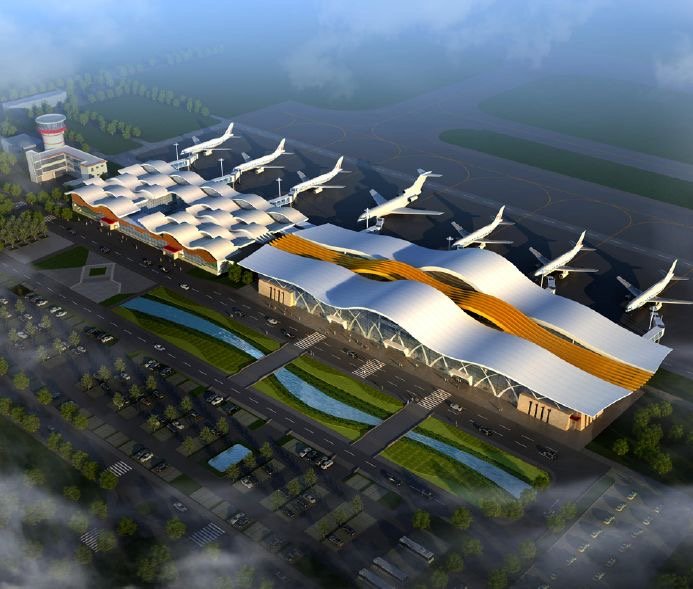
Civilian Role and Regional Connectivity
While the airport has strategic relevance, it also plays a vital role in regional development and tourism growth in Nyingchi Prefecture.
By improving air access to southeastern Tibet, the airport has strengthened economic connectivity with major cities across China. Faster travel times encourage tourism, trade, and cultural exchange, benefiting the local economy.
Gateway to Natural Attractions
Nyingchi is known for its lush river valleys and alpine scenery, often described as one of Tibet’s greenest regions. The airport provides convenient access to attractions such as:
- Yarlung Tsangpo Grand Canyon
- Nanyi Valley
- Basum Lake
Improved accessibility has led to increased domestic tourism, especially during spring and autumn when the region’s forests and river landscapes are at their most vibrant.
Linzhi (Nyingchi) Airport Shuttle Services: Your Ultimate Guide
Here’s everything you need to know about shuttle services between Linzhi Airport and Linzhi City Center. The reliable airport shuttle service ensures smooth connections for travelers arriving or departing from this scenic region of Tibet.
Shuttle Departure Points
From Linzhi City Center: The shuttle departs from the Bayi District, New Civil Aviation Base. Travelers can catch the shuttle at the following times:
6:30 AM, 6:45 AM, 7:00 AM, 7:15 AM, and 8:00 AM.t operations and passenger demand.
From Linzhi Airport: Shuttles depart from the Arrival Hall Exit of Linzhi Airport. The timing is flexible, as departures are scheduled once the shuttles are full, ensuring every passenger gets a ride.
Why Choose the Airport Shuttle?
- Budget-friendly transportation
- Reliable for morning flights
- Convenient departure locations
- Scenic drive experience
Travelers with heavy luggage can typically receive assistance from shuttle staff.
Getting to Basum Lake from the Airport
To visit Basum Lake (also known as Baksum Tso), travelers can:
- Take a regular bus from Bayi Coach Station to Bahe Bridge
- Fare: CNY 30 per person
- Frequency: Every 30 minutes
- Hire a private car from Bahe Bridge to the lake
- One-way: CNY 25 per person
- Round-trip charter: Around CNY 150
This route offers one of the most scenic drives in southeastern Tibet.
Practical Information
Airport Inquiry Phone Number:
+86 0894-5482731
For updated flight schedules, transportation details, and official announcements, travelers should check the official website of Nyingchi Mainling Airport before departure, especially due to the airport’s weather-dependent operating schedule.
By serving both transportation and strategic functions, Nyingchi Mainling Airport remains one of southeastern Tibet’s most important infrastructure hubs, connecting remote highland landscapes with major urban centers.