

Princess Jincheng (698–739), originally named Li Nunu (李奴奴), was the adopted daughter of Emperor Zhongzong of the Tang Dynasty and the biological daughter of Prince Li Shouli. In 710, she journeyed across the vast Tibetan Plateau to marry Tibetan King Tridé Tsuktsen, becoming the second Tang princess—after Princess Wencheng—to enter Tibet through a political marriage.
Living in Tibet for nearly three decades, Princess Jincheng (གྱིམ་ཤིང་ཀོང་ཇོ།) played a crucial role in maintaining peace, encouraging cultural exchange, and strengthening diplomatic ties between the Tang Empire and the Tibetan Kingdom. Today, she is remembered as a timeless symbol of unity and intercultural connection.
Historical Background: Why the Tang–Tibet Marriage Alliance Happened
The Rise of the Tibetan Empire (7th–8th Century)
During the 7th and 8th centuries, the Tibetan Empire (618–842) reached the height of its power. When Tridé Tsuktsen ascended the throne in 704 at just seven years old, his grandmother governed as regent. Relations between Tang China and Tibet were complex. While earlier alliances—such as Princess Wencheng’s marriage—brought cooperation, internal power struggles within Tibet led to periods of military conflict.
Between 706 and 708, Tibetan envoys repeatedly requested a marriage alliance. Such a union would:
- Strengthen political stability
- Counter northern threats like the Turkic forces
- Promote long-term diplomatic cooperation
The Decision to Send Princess Jincheng
In 707, the Tang court approved the marriage proposal. Li Nunu was chosen and officially granted the title “Princess Jincheng,” symbolizing her status as an imperial daughter.
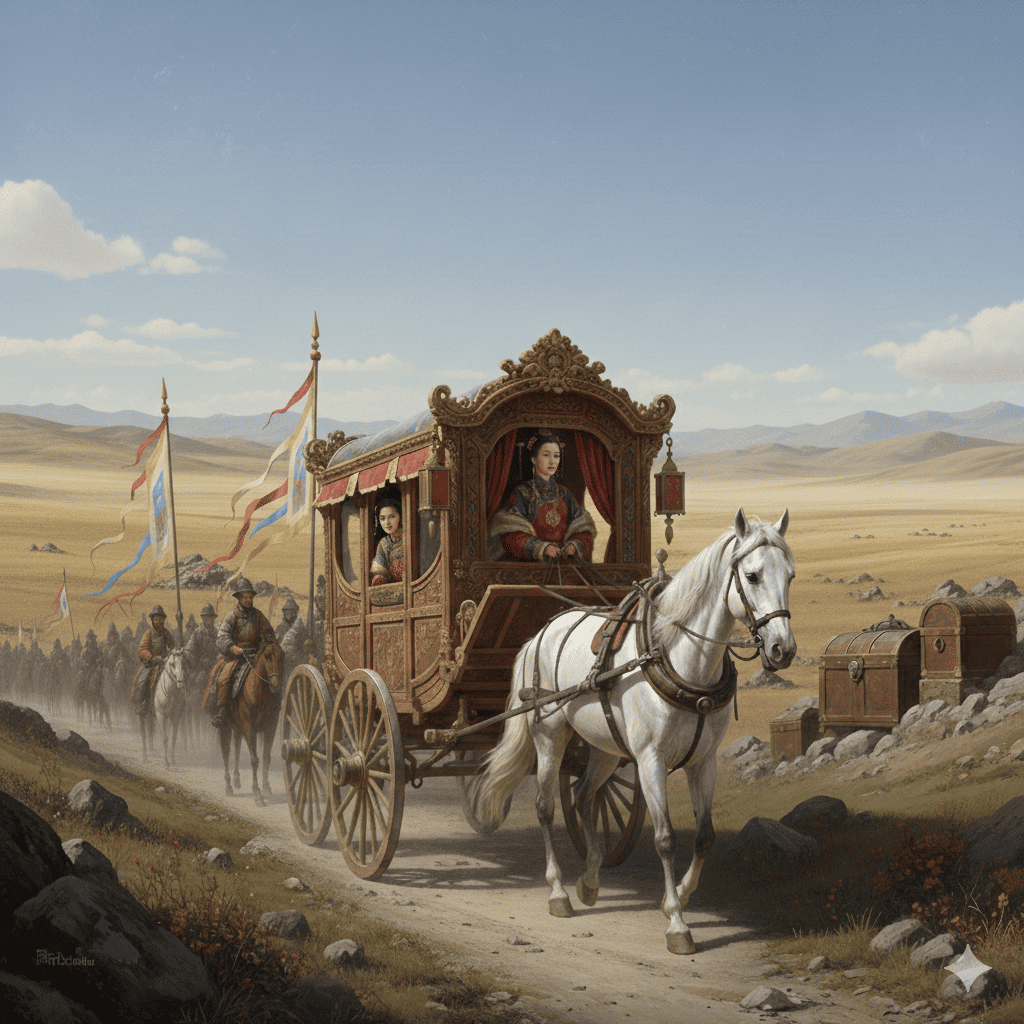
Historical inscriptions, including the Tang–Tibet Treaty Pillar, record that in 710, Princess Jincheng was formally given in marriage to the Tibetan king. Tibet dispatched officials to escort her, while the Tang court provided an elaborate dowry that included silk, entertainers, musicians, artisans, and numerous medical and technical texts.
The emperor appointed the high general Yang Ju to accompany and protect the procession and personally escorted the princess as far as Shiping, where a grand banquet was held for both Tang and Tibetan envoys. Prisoners in the region were pardoned, capital punishments were commuted, and local residents were exempted from taxes for a year. In commemoration of the event, the county was renamed “Jincheng.”
From Chang’an to Lhasa: A Princess’s Life-Changing Journey
Noble Origins and Early Responsibility
Born in 698, Princess Jincheng was the granddaughter of Crown Prince Li Xian. Raised within the imperial palace, she received an elite education and courtly upbringing.
- Adopted by the emperor at a young age
- Chosen for the marriage alliance as a teenager
- Began her journey to Tibet at 17, embarking on a life far from the Tang capital
Her story reflects both personal sacrifice and diplomatic strategy.
Legends Surrounding the Marriage
According to many traditional Tibetan historical accounts, Princess Jincheng was considered a true imperial daughter. She was initially intended to marry Jangtsa Lhawön, the son of King Tridé Tsukten (Me Agtsom). However, before the princess arrived in Tibet, the prince died after being thrown from a horse. It caused a treasured mirror to fall and split into two halves that transformed into the Sun and Moon Mountains.
As a result, she was instead taken as a consort by King Tridé Tsukten. It is said that she later gave birth to Prince. Stories also recount tensions with the senior queen, Nanamza, which supposedly led the princess—out of anger—to disrupt several Fengshui favorable sites around Lhasa and Samye.
Upon arrival, the princess supported Buddhist monks from Khotan in building temples and translating scriptures. She also helped enshrine the revered Shakyamuni statue brought earlier by Princess Wencheng.
The Ancient Route: Crossing 3,000 Kilometers of Plateau
Princess Jincheng traveled roughly 3,000 kilometers along what later became part of the ancient highland Silk Road.
Major Stages of the Journey:
- Chang’an → Shiping: Imperial farewell with poems written in her honor
- Shaanxi → Gansu: Crossing the Loess Plateau into the Hexi Corridor
- Gansu → Qinghai: Passing Riyue Mountain, marking entry into Tibetan territory
- Qinghai → Central Tibet: Through Yushu and Nagqu before reaching Lhasa
During the journey, she ordered the carving of a Buddhist statue to honor Princess Wencheng—possibly creating one of the earliest Buddhist halls in the region.
Mutual Benefits of the Tang–Tibet Alliance
Advantages for the Tang Dynasty
- Border Stability: Reduced military spending by minimizing conflicts
- Strategic Security: Strengthened defenses against regional powers
- Cultural Influence: Expanded the reach of Confucian thought and Buddhism
Advantages for Tibet
- Political Support: Helped consolidate royal authority
- Economic Growth: Introduced technologies such as farming, papermaking, weaving, and architecture
- Cultural Flourishing:
Princess Jincheng is credited with bringing important Chinese classics, including:
- Book of Songs (Mao Shi)
- Book of Rites
- Zuo Zhuan
- Wen Xuan
She also introduced musical traditions and court rituals that influenced Tibetan performing arts for centuries.
Contributions to Medicine and Ritual
Historical sources suggest collaboration on early medical texts and the integration of tea with herbal treatments—an innovation that later shaped Tibetan medical practices.
She also helped establish Buddhist ceremonial traditions, including extended memorial rituals that became part of Tibetan culture.
A Political Peacemaker: The Red Ridge Treaty
One of Princess Jincheng’s greatest diplomatic achievements was her role in facilitating the Red Ridge Treaty (733).
This agreement:
- Defined territorial boundaries
- Reopened trade routes
- Declared the two states “as one family”
Letters preserved in historical records reveal her repeated appeals for peace to the Tang emperor—demonstrating her dedication to diplomacy.
The relationship was even framed as a familial bond, with Tibet referring to itself as the emperor’s “nephew state,” reinforcing political closeness.
Cultural Legacy in Tibet
Revival of Buddhism
Princess Jincheng helped restore the revered 12-year-old Shakyamuni statue and relocate it to the Jokhang Temple, strengthening the temple’s religious importance.
Institutional Reforms
Working alongside the Tibetan court, she supported administrative improvements that contributed to social development.
Her request for Confucian texts in 730 further deepened intellectual exchange between the two civilizations.
Lasting Influence: A Symbol of Unity
More than a millennium later, Princess Jincheng remains a powerful emblem of harmony between cultures.
Cultural Memorials
- A pedestrian street named after her stands in Zhanang County near Samye.
- Historic palaces associated with her still attract scholarly interest.
- The Tang–Tibet Ancient Road is now a cultural tourism route retracing her journey.
Spiritual and Modern Significance
Her legacy continues to inspire discussions on diplomacy, multicultural identity, and peaceful coexistence. Stories of her life have been adapted into:
- Television dramas
- Stage productions
- Documentaries
- Audiobooks
These works keep her narrative alive for new generations.
Historical Records That Document Her Life
Princess Jincheng lived in Tibet for 31 years before passing away in 739, during the 27th year of the Kaiyuan era under Emperor Xuanzong. That same year, Jangtsa Lhawön—son of King Tridé Tsukten—also died. Detailed accounts of these events can be found in sources such as the Old and New Books of Tang, the Red Annals, and the Dunhuang manuscripts.
Chinese Sources
Key chronicles include:
- Old Book of Tang – Details the marriage alliance and treaty
- New Book of Tang – Records gifts and cultural exchanges
- Zizhi Tongjian – Describes evolving Tang–Tibet relations
- Complete Tang Poems – Preserves farewell poems written for the princess
Tibetan Sources
Important Tibetan texts recount her influence on religion, diplomacy, and royal lineage traditions, further confirming her historical importance.
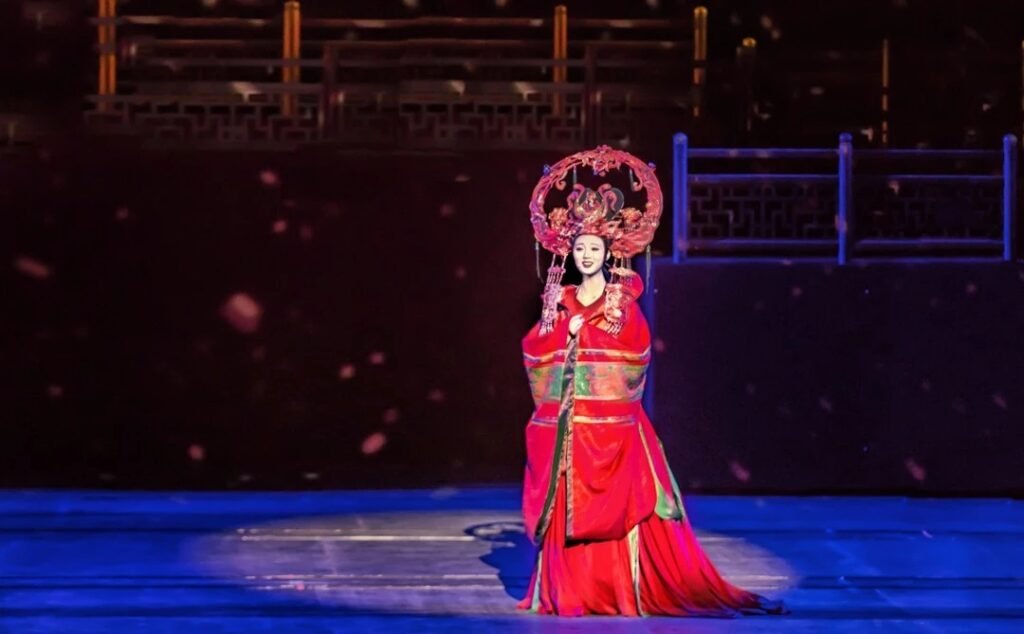
Princess Jincheng in Film and Performing Arts
Her extraordinary life has inspired numerous artistic interpretations:
- TV Drama “Princess Jincheng” (2013) – Depicts her diplomatic efforts and emotional journey
- Large-scale Tibetan Opera (2025) – Blends epic storytelling with traditional performance
- Stage productions in Lhasa – Now a major cultural tourism attraction
- Documentary features exploring civilizational exchange
Through these works, her story transcends time and geography.
Historical Reputation and Enduring Memory
Princess Jincheng devoted nearly 30 years to life on the Tibetan Plateau, embodying sacrifice for the greater good. Her impact extended far beyond a political marriage—shaping diplomacy, religion, medicine, arts, and social customs across the region.
Temples, cultural traditions, and historical narratives across Tibet still echo her contributions, reflecting a legacy that continues to influence intercultural understanding today.