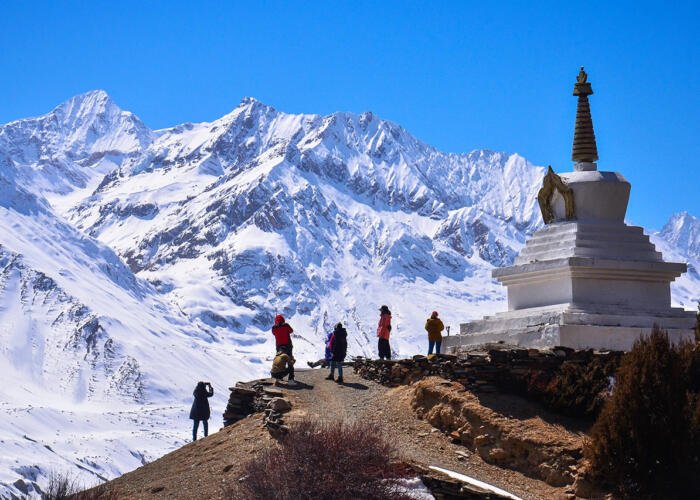
Introduction Traveling to Tibet from Canada offers a unique and transformative experience that combines rich cultural significance with breathtaking natural landscapes. As one of the most elevated regions on Earth, Tibet is renowned for its stunning mountains, expansive plateaus, and a vibrant heritage that reflects centuries of history. Canadian tourists often find themselves drawn to...Read More
Discover the Lingka Festival, a special national custom of the Tibetans. People camp in the forest, celebrating nature and legends of peace and happiness.Read More
Explore the serene Nechung Monastery, nestled in Lhasa's western suburbs, just a kilometer away from the famous Drepung Monastery. Known as Nechung Drayang Ling, this historical site is the abode of Pehar, the chief protector deity in Tibetan Buddhism, and hosts the Tibetan Buddhist College. With its rich history dating back to the 7th century,...Read More
Discover the seamless travel and cultural richness when flying from Shanghai to Lhasa. Learn about the benefits of direct flights, the ease of booking, and tips for a high-altitude adventure. Begin your unforgettable journey to Tibet's capital with our comprehensive guide.Read More
Introduction to Traveling in Tibet Tibet, often referred to as the “Roof of the World,” is a captivating destination that draws travelers from around the globe, including those from Canada. Renowned for its breathtaking landscapes, including the majestic Himalayas and expansive plateaus, Tibet offers a unique blend of natural beauty and rich cultural heritage. The...Read More
Traveling from Mangkang (Markham) County to Yanjing is more than a road trip—it is a journey through one of eastern Tibet’s most historically layered corridors. Stretching approximately 120 kilometers, this route follows the legendary Yunnan–Tibet Highway (National Highway 214) and traces an ancient artery of trade, belief, and cultural exchange along the Tea Horse Road....Read More
The Jonang School, one of the major traditions of Tibetan Buddhism, holds a distinctive place in Buddhist history and philosophy. Originating from a valley in Pencholing Township, Lhatse County, its name derives from “Jonang,” with highlighting its geographic roots. The school emerged in the 11th century, tracing its philosophical foundations to Yumo Mikyö Dorje, a...Read More
In the vibrant and culturally rich land of Tibet, religious activities have always played a significant role in the lives of its people. The 17th century marked a turning point when these activities took on a symbolic meaning, captivating the hearts and minds of the locals. One such festival that embodies this symbolism is the...Read More
To travel from the Philippines to Tibet, you will need to take a flight to one of the major cities in China, such as Beijing, Shanghai, or Chengdu, and then make your way to Tibet. There are several airlines that operate flights from the Philippines to major cities in China. Some of the popular airlines...Read More
Discover the ultimate adventure with Yamdrok Yumtso Lake Paragliding Tours. Experience the thrill of soaring above one of Tibet's most stunning lakes, surrounded by enchanting landscapes. Our scenic routes promise unforgettable aerial views and a unique perspective of this serene and mystical region. Perfect for adventure seekers and nature lovers. Book your flight today for...Read More
Early Life and Recognition Chökyi Gyaltsen, who would later be renowned as the Tenth Panchen Lama, was born in 1938 in Wendu Township of Qinghai Province, China. His early life unfolded in a culturally rich setting steeped in Tibetan Buddhism, which significantly shaped his spiritual journey. Wendu Township, an area known for its strong Buddhist...Read More
Introduction to Drigung Tangpa Tashi Pel Drigung Tangpa Tashi Pel, a prominent figure in the history of Tibetan Buddhism, is renowned as the founder of the Drigung Kagyu School, one of the key lineages within the Kagyu sect. His contributions during the 12th century not only shaped the spiritual landscape of Tibet but also established...Read More
Tibet’s demographic profile continues to demonstrate stability with minor fluctuations, as highlighted by the latest population survey. As of the end of 2023, Tibet’s permanent resident population was estimated at 3.65 million, reflecting a largely steady growth pattern. This article delves into key statistics, trends, and the implications for Tibet’s future. Key Population Statistics for...Read More
Overview of Jiayu Temple Location and Historical Significance: Jiayu Temple, also known as vgya-yul-dgon, is located in Qiangqin Village, Jiayu Township, Longzi County, at an altitude of 3350 meters. Founded between the 15th and 16th centuries by eminent monks of the Kagyu sect, it was established by Jiayu Waqinpo Xunnuwo (1075—1138), originally named “Qiangqin Baigar...Read More
The Four Tathagatas are central deities in Yungdrung Bon, representing the most serene figures in this spiritual tradition. These deities are Sangpo Bumtri, Shenlha Okar, Tonpa Shenrab Miwoche, and the Great Compassionate Mother (ཡུམ་ཆེན་མོ་ས་ཏྲིག་ཨེར་སངས།). In this article, we will introduce the first three deities, as the Great Compassionate Mother has been detailed in previous writings....Read More
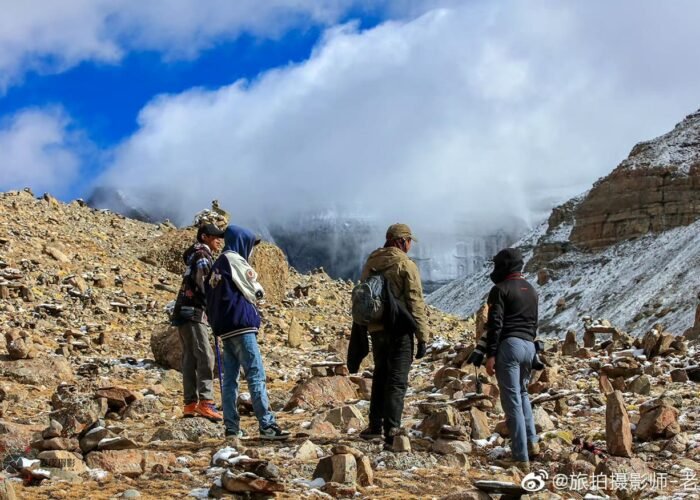
Mount Kailash, located in western Tibet, is one of the most sacred pilgrimage sites on Earth. Revered by Hindus, Buddhists, Jains, and Bon followers, the mountain is believed to be the spiritual center of the universe. Pilgrims undertake the 52 km Mount Kailash kora (circumambulation) and usually combine it with a visit to Lake Mansarovar,...Read More
The stage play “Princess Jincheng” on the banks of the Lhasa River showcases Tibetan original ecological music, dance, drama, and folklore, presenting the rich traditional culture of Tibet to audiences both locally and internationally. A large number of tourists and audience members enjoy a splendid display of Tibetan culture as they witness the revival of...Read More
Discover the profound benefits of the Parnashavari Mantra for healing and protection against diseases. Explore the ancient Buddhist tradition and the significance of this powerful incantation.Read More
Located along National Highway 318 in Mangkang (Markham) County, the Haitong Stone Forest is one of eastern Tibet’s most impressive karst landscapes. Just over 20 kilometers from Mangkang (Markham) county town, this natural wonder lies within a vast, forested region rich in wildlife, clear streams, and dramatic mountain scenery. Towering stone formations rise suddenly from...Read More
Kongpo (Gongbu) New Year: A Forest Losar of Ancient Rituals and Living Traditions The Kongpo (Gongbu) New Year is one of the most distinctive traditional festivals in eastern Tibet. Recently listed among the first batch of regional-level intangible cultural heritage items in Tibet, this festival reflects the deep connection between Kongpo people and their forested...Read More
Birth and Early Recognition of the 10th Dalai Lama Early Life and Recognition of the 10th Dalai Lama, Tsultrim Gyatso Tsultrim Gyatso, the 10th Dalai Lama of Tibet, was born on May 25 or 26, 1816, in Donapu Village, in Lithang County, part of the Kham region of eastern Tibet (modern-day Sichuan Province). His family,...Read More